Best Space Heaters for Bedrooms and Living Rooms (2026): Safe, Quiet and Energy-Smart Picks

Quick answer
The best space heater for bedroom use in most US homes is the DREO 1500W ceramic heater: the listing describes a 34 dB brushless motor, a digital thermostat from 41 to 95°F in 1-degree steps, tip-over and overheat protection, a 12-hour timer and ETL certification.
If you want silent, fan-free heat, the De’Longhi EW7707CM oil-filled radiator is our pick, and the Lasko 751320 ceramic tower with oscillation and a remote is the best space heater for living room seating areas. Whichever you choose, every 1500 W plug-in heater uses about 1.5 kWh per hour on high, or roughly 27 cents an hour at the EIA US average electricity price, so the thermostat and ECO modes matter more than the brand. For more fan-free choices, we compare seven models in our best oil filled radiator heater guide.
Want a flame to look at too? Our best electric fireplace guide compares 1500 W TV stands, inserts and wall-mount units. Space heaters are for indoors only; for warmth on the patio, see our best fire pits guide or our best patio heater picks for propane, electric infrared and natural gas.
Disclosure: As an Amazon Associate I earn from qualifying purchases.
- DREO 1500W Ceramic Space Heater with Thermostat — best overall bedroom heater: 34 dB listed, 1°F thermostat, tip-over and overheat protection, ETL.
Check current price on Amazon → - De’Longhi EW7707CM Oil-Filled Radiator — best fan-free, quiet heat for overnight warmth, with ComfortTemp and an anti-freeze setting.
Check current price on Amazon → - Lasko 751320 23-Inch Ceramic Tower with Remote — best for living rooms: wide oscillation, 7-hour timer, ETL listed, cool-touch housing.
Check current price on Amazon →

A good portable heater lets you keep the central thermostat a few degrees lower and warm only the room you are actually sitting or sleeping in. The catch is that space heaters are also one of the leading causes of home heating fires, so the best space heater for bedroom or living room use is not just the warmest one: it is the one with a reliable thermostat, tip-over and overheat shutoff, a safety listing from ETL or UL, and a noise level you can sleep through.
This guide compares eight popular Amazon heaters across every main type (ceramic, oil-filled, infrared, smart Wi-Fi and a small budget model), then adds a room size vs watts table, a worked cost-to-run example, a heater type comparison and the NFPA and CPSC safety rules. For whole-apartment strategies, read our guide on how to keep an apartment warm and check the average heating bill by state. To warm yourself instead of the whole room on a fraction of the power, see our best electric blanket and heated throw picks. Or warm the bed itself with a heated mattress pad, which draws far less power than a 1,500 W heater.
Best space heater for bedroom and living room: comparison table
Every wattage, safety feature, noise figure and thermostat range below comes from the Amazon product pages (listing bullets or the brand comparison chart). Where a listing does not state something, we say “not listed” rather than guess. We left prices and ratings out on purpose because they change daily in heating season; use the links to see the current price.
| Space heater | Type | Power (listed) | Safety (listed) | Noise (listed) | Thermostat | |
|---|---|---|---|---|---|---|
| DREO 1500W Ceramic Heater Best Overall for Bedrooms | Ceramic (PTC) + fan | 1500 W | Tip-over sensor, overheat, ETL | 34 dB | Digital, 41–95°F | Check current price on Amazon |
| De’Longhi EW7707CM Oil-Filled Radiator Best Oil-Filled | Oil-filled radiator, no fan | 1500 W, 3 settings | Thermal cut-off, enclosed elements | Not listed (no fan) | Dial + ComfortTemp | Check current price on Amazon |
| Lasko 751320 23″ Ceramic Tower Best for Living Rooms | Ceramic tower, oscillating | 1500 W, 2 settings | Overheat, cool-touch, ETL | Not listed | Adjustable, remote | Check current price on Amazon |
| Dr Infrared DR-968 Best Infrared for Large Rooms | Infrared quartz + PTC | 1500 W, 5,200 BTU | Tip-over, overheat, UL | 39 dB | Electronic, 50–85°F | Check current price on Amazon |
| DREO Smart Wall Heater Best Smart / Wi-Fi | Wall-mounted ceramic (PTC) | 1500 W | ETL listed (brand chart) | Not listed | Digital, 41–95°F, app | Check current price on Amazon |
| Vornado AVH10 (2026) Best Whole-Room Circulation | Vortex forced air | 2 heat settings (wattage not listed) | Tip-over, safety shut-off, cool-touch, ETL | Not listed | Auto Climate | Check current price on Amazon |
| Amazon Basics Ceramic Heater Best Budget / Small Personal | Small ceramic, non-oscillating | 1500 W / 900 W | Tip-over, overheat | 43 dB | Thermostat | Check current price on Amazon |
| DREO Atom One 1500W Oscillating Best Compact Oscillating | Ceramic (PTC) + fan, 70° oscillation | 1500 W | Tip-over, overheat, ETL, safety plug | 37.5 dB | Digital, 41–95°F | Check current price on Amazon |
Our picks: the best space heater for bedroom, living room and small spaces
We ordered the picks from the most broadly useful heater to the most specialized. Each card lists the facts from the product page, who it suits and what to check before you buy. All seven plug into a standard 120-volt outlet, and none of them should be run on an extension cord or power strip.
1. DREO 1500W Ceramic Space Heater with Thermostat
For most people, this is the best space heater for bedroom use because it combines the three things that matter at night: low noise, an accurate thermostat and solid tip-over protection. DREO lists a 1500 W PTC ceramic element with a heat funnel design, a brushless DC motor rated at 34 dB, and a digital thermostat you can set from 41 to 95°F in 1-degree steps, so the heater cycles off once the room reaches your target instead of running flat out.
On safety, the listing describes a tilt-detection sensor for tip-over protection, overheat protection, V0 flame-retardant materials and a safety plug, all certified by ETL. You also get Power Heat, ECO and Fan Only modes, a remote, a 12-hour timer, a mute option, child lock and memory function. The ECO mode and the timer are the features that keep a bedroom heater from quietly adding to your electric bill.
Heaters also dry out the air, so pair one with a quiet humidifier for the bedroom to keep humidity in the comfortable 30 to 50 percent range. In a cold, damp basement the opposite applies: our best dehumidifier for basement guide covers pump and ENERGY STAR models.
- 34 dB motor listed, quiet enough for sleep
- Thermostat 41–95°F in 1°F steps
- Tip-over sensor, overheat protection, ETL
- Remote, 12-hour timer, child lock, mute
- A fan heater, so it moves some air (and dust)
- Best for one room, not a whole open-plan floor
Best for: Bedrooms, nurseries (with supervision) and home offices up to about 150 sq ft
Check current price on Amazon →2. De’Longhi EW7707CM Oil-Filled Radiator Heater
If you want heat with no fan noise at all, and you sleep lightly, the best space heater for bedroom comfort may be a radiator rather than a fan heater. An oil-filled radiator is the classic answer, and the De’Longhi EW7707CM is the one we would pick.
Its 1500 W elements warm a permanently sealed diathermic oil reservoir that never needs refilling; the fins then radiate gentle heat for a long time, even after the thermostat clicks off. De’Longhi says that with no fan there is less dust, pollen and dander stirred up, and the heat is gentler on dry winter air. If you also want to filter dust and pet dander from bedroom air, our guide to the quiet air purifier for bedroom use compares sleep-mode noise levels. For a bigger living room, our large room air purifier guide explains CADR sizing and high ceilings.
The listing says its ComfortTemp feature automatically holds an optimal temperature and power level and is up to 20% more efficient than running the same unit at its maximum thermostat setting. There are 3 heat settings, a rotary thermostat, a thermal slot design that keeps the surface temperature lower, thermal cut-off, fully enclosed heating elements and an anti-freeze setting that turns the heater on when the room dips below 41°F. Snap-on wheels and a handle make it easy to roll from the living room to the bedroom.
- No fan: the quietest type of heat
- Long-lasting warmth from sealed oil
- ComfortTemp energy-saving mode listed
- Anti-freeze setting below 41°F
- Slow to warm up compared with ceramic
- Heavier; uses wheels instead of a carry handle only
Best for: Light sleepers, allergy-prone households and anyone who wants steady overnight background heat
Check current price on Amazon →3. Lasko 751320 23-Inch Ceramic Tower Heater with Remote
A tall oscillating tower spreads heat across a sofa and chairs better than a small cube heater, which is why the Lasko 751320 is our best space heater for living room seating areas. Lasko lists 1500 W of ceramic heat with wide oscillation for medium-sized rooms, a self-regulating ceramic element, overheat protection and a cool-touch housing, and the heater is ETL listed.
The remote handles heat settings, oscillation and the timer, and the 7-hour auto-off timer means it shuts itself down if you forget it after a movie night. The listing mentions 2 heat settings and an adjustable thermostat, and there is a built-in carry handle for moving it between rooms. Lasko has made fans and heaters since 1906, and this is one of its long-running tower models.
- Wide oscillation for seating areas
- ETL listed, overheat protection, cool-touch housing
- Remote plus 7-hour auto-off timer
- Slim 23-inch footprint
- Tip-over switch not mentioned in this listing
- Noise level not listed
Best for: Living rooms, family rooms and home offices where heat needs to reach more than one seat
Check current price on Amazon →4. Dr Infrared Heater DR-968 Portable Space Heater
The DR-968 is the heater to look at for a bigger living room or a drafty open-plan space. Dr Infrared lists 1500 W and up to 5,200 BTU from a dual system that combines infrared quartz (direct radiant heat that warms people and furniture) with PTC elements and a high-velocity, low-noise blower that pushes warm air across the room. The brand says it heats spaces up to 1000 sq ft; treat that as a best case in a well-insulated room, because the physics of 1500 W is the same for every plug-in heater.
Safety features listed include tip-over protection, overheat protection, automatic shutoff, a full metal housing and a cool-touch cabinet; it is UL certified and made without PTFE. The electronic thermostat runs from 50 to 85°F, there is an infrared remote and a 12-hour timer, and the blower is rated at 39 dB. The wood-look cabinet looks more like furniture than an appliance, which helps in a living room.
- Infrared + PTC dual heat with blower
- Tip-over, overheat, auto shutoff, UL certified
- 39 dB listed; remote and 12-hour timer
- Furniture-style wood-look cabinet
- Larger and heavier than a tower heater
- Thermostat starts at 50°F, not lower
Best for: Large living rooms, basements used as family rooms and rooms with high ceilings
Check current price on Amazon →5. DREO Smart Wall Heater 1500W
If you like scheduling heat from your phone, the DREO Smart Wall Heater is the smart pick. The listing says you can set room heating hours to match your routine in the DREO app, change settings from anywhere and use voice control through Alexa and Google Home. The thermostat runs from 41 to 95°F in 1°F steps, and 120-degree oscillation spreads warm air from top to bottom of the room.
Because it mounts on the wall, it keeps the floor clear, which is helpful in a small bedroom or a room with kids and pets, and the package includes a drilling guide and the mounting hardware.
For sleep, DREO says the LED panel automatically dims in low light and the heater runs with lower noise. The brand comparison chart on the listing marks it as ETL listed. For renters who can drill, it is the best space heater for bedroom setups that run on a schedule. A smart schedule is the easiest way to warm a bedroom for 30 minutes before bed and in the morning without leaving a heater on all night.
- App schedules plus Alexa and Google Home
- Thermostat 41–95°F in 1°F steps
- Wall mount frees floor space
- Display auto-dims at night
- Needs drilling into a wall (check your lease)
- Must stay near an outlet; do not use an extension cord
Best for: Renters with permission to mount, smart-home fans and small bedrooms short on floor space
Check current price on Amazon →6. Vornado AVH10 (2026) Whole-Room Space Heater
Vornado heaters work a little differently: instead of blasting a hot jet of air, Vortex Heat Circulation moves warm air through the whole room, which Vornado compares to a mini forced-air furnace. The 2026 AVH10 adds Auto Climate control, which senses how much heat and airflow are needed to hold your chosen temperature and adjusts power and fan speed automatically.
You get 2 quiet heat settings plus a fan-only mode for summer. Listed safety features are a cool-touch exterior, automatic tip-over protection and a built-in safety shut-off system, and the listing graphics show it as ETL listed. Vornado offers a 5-year replacement guarantee, and the product is designed and supported in Andover, Kansas. The listing does not state the wattage, so check the product details before you plan your circuit.
- Whole-room Vortex circulation
- Auto Climate adjusts heat and fan
- Tip-over, safety shut-off, cool-touch, ETL
- 5-year replacement guarantee; fan-only mode
- Wattage not stated in the listing
- No remote mentioned
Best for: Small to medium rooms where you want even, whole-room warmth rather than a hot spot
Check current price on Amazon →7. Amazon Basics 1500W Ceramic Space Heater
For a desk, a small guest room or a dorm, a small personal heater is often all you need, and the Amazon Basics ceramic heater is the simple budget pick. It has three settings: High (1500 W), Low (900 W) and Fan Only. It weighs just 3 pounds and measures about 7.5 x 6.3 x 9.5 inches, so it tucks under a desk or onto a dresser away from bedding.
The listing includes tip-over protection, overheat protection and a power indicator light, ceramic heating that warms in minutes and a 43 dB noise level. If your room is tiny, it can be the best space heater for bedroom corners and desks on a tight budget. It does not oscillate, so it is best pointed at you rather than at a whole room. Amazon also warns not to use it in bathrooms, laundry rooms or other humid areas. The 900 W low setting is a real advantage for running costs, as the table further down shows.
- Low 900 W setting saves energy
- Tip-over and overheat protection
- Only 3 lb and very compact
- Fan-only mode
- Non-oscillating, personal heat only
- 43 dB is louder than the DREO; no remote listed
Best for: Home offices, under-desk heat, dorms and small bedrooms up to about 100 sq ft
Check current price on Amazon →8. DREO Atom One 1500W Oscillating Ceramic Space Heater
DREO’s Atom One is a 2026 addition and a compact ceramic heater that sweeps warmth across a room with 70-degree oscillation. It is about 6.69 x 5.51 x 10.31 inches and 3.85 pounds, so it sits by your feet, on a desk or on a dresser, and DREO lists it for spaces up to about 200 square feet. A brushless DC motor keeps it as quiet as 37.5 dB, per the listing.
Safety features include ETL listing, tip-over and overheat protection, an enhanced safety plug and UL94 V-0 flame-retardant materials. A digital thermostat sets 41 to 95°F in 1-degree steps, ECO mode adjusts heat automatically, and you get 5 modes, a 12-hour timer and a remote. Like any 1500 W heater, plug it straight into a wall outlet, not an extension cord.
- 70° oscillation
- Small and light
- 1°F thermostat steps, ECO mode
- Tip-over and overheat protection
- Best for small rooms (about 200 sq ft listed)
- Fan noise, unlike an oil-filled radiator
Best for: Small bedrooms, home offices and under-desk warmth
Check current price on Amazon →Prefer silent, fan-free heat? Oil-filled radiators such as the De’Longhi pick above warm a room slowly but make almost no noise, which many people prefer for bedrooms. Want warmth outside or a flame effect indoors? See our patio heater guide and our electric fireplace picks.
What size is the best space heater for bedroom or living room? Room size vs watts
The common rule of thumb is about 10 watts of heater power per square foot of floor space for supplemental heat in a room with standard 8-foot ceilings. Measure the room (length x width), multiply by 10, and compare that with the heater wattage. Because a standard US outlet tops out at 1500 W for a portable heater, a single plug-in unit is realistic for rooms up to about 150 sq ft; for bigger living rooms it can take the chill off a seating area, but it will not replace central heat.
| Room | Typical size | Floor area | Watts needed (~10 W/sq ft) | Good fit |
|---|---|---|---|---|
| Small bedroom / office | 8 x 9 ft | 72 sq ft | ~700 W | Small heater on low (900 W) |
| Average bedroom | 10 x 10 ft | 100 sq ft | ~1,000 W | Any 1500 W heater with thermostat |
| Primary bedroom | 12 x 12 ft | 144 sq ft | ~1,450 W | 1500 W ceramic or oil-filled |
| Small living room | 12 x 15 ft | 180 sq ft | ~1,800 W | 1500 W tower or infrared; zone the seating area |
| Large living room | 16 x 20 ft | 320 sq ft | ~3,200 W | Supplement only; seal drafts first |
Add 10 to 20 percent for high ceilings, single-pane windows, a room over a garage or a corner room with two outside walls. If the math says you need more than 1500 W, do not plug two big heaters into the same circuit. Instead, cut heat loss with thermal insulated curtains and a door draft stopper, and heat only the zone where you sit.
Space heater cost to run per hour and per month
Every electric resistance heater turns 100 percent of the electricity it draws into heat, so a 1500 W ceramic, oil-filled or infrared model costs the same per hour on high. The space heater cost to run per hour is simply: watts ÷ 1,000 x hours x your electricity rate. For the worked example below we used the US average residential electricity price of 18.31 cents per kWh from the U.S. Energy Information Administration (EIA) as an assumption; your own rate is on your utility bill and can be much higher or lower depending on your state.
| Setting | kWh per hour | Cost per hour | 8-hour night | 4 h/day for 30 days | 8 h/day for 30 days |
|---|---|---|---|---|---|
| 1500 W (high) | 1.5 kWh | about 27.5¢ | 12 kWh, about $2.20 | 180 kWh, about $32.96 | 360 kWh, about $65.92 |
| 750 W (low / ECO) | 0.75 kWh | about 13.7¢ | 6 kWh, about $1.10 | 90 kWh, about $16.48 | 180 kWh, about $32.96 |
Assumption: EIA US average residential price of 18.31¢/kWh, heater running continuously at the stated wattage. Generic by wattage, not tied to any product. A thermostat that cycles the heater off will lower the real figure.
Two lessons come out of that table. First, the low setting or ECO mode halves the space heater cost to run per hour, so a heater with a real thermostat and a low setting is the most energy efficient space heater you can buy, whatever the marketing says.
Second, running a 1500 W heater eight hours a day can add the cost of a streaming bundle or more to a monthly bill, which is why zoning makes sense only if you also turn the central thermostat down. We used the same math for holiday lights in our guide to the cost to run Christmas lights.
What makes an energy efficient space heater?
- A digital thermostat that holds a set temperature (the DREO models list 1°F steps), so the heater cycles off instead of running on high all night.
- Low and ECO modes such as the Amazon Basics 900 W setting or De’Longhi ComfortTemp.
- A timer or schedule to warm the room before bed and shut off on its own.
- Right-sizing: a heater matched to the room reaches temperature sooner and cycles more.
- Lower central heat: savings only appear if you turn the furnace down while you heat one room.
Oil-filled vs ceramic vs infrared heaters
All three types use the same electricity per watt; they differ in how the heat reaches you, how fast it feels warm and how much noise they make.
| Type | How it heats | Warm-up | Noise | Best room | Watch-outs |
|---|---|---|---|---|---|
| Ceramic (PTC) | Fan blows air over ceramic plates | Fast (minutes) | Low fan hum | Bedrooms, offices | Moves dust; small units heat a zone |
| Oil-filled radiator | Heats sealed oil; fins radiate | Slow (15–30 min) | Near silent | Bedrooms, nurseries, overnight background heat | Heavy; surface gets warm |
| Infrared / quartz | Radiant heat warms people and objects | Instant at close range | Low (with blower) | Living rooms, drafty spaces | Feels best in line of sight |
| Wall-mounted ceramic | Fan heater fixed to wall | Fast | Low | Small bedrooms, bathrooms only if rated | Install near outlet; renters need permission |
In short, when you shop for the best space heater for bedroom nights, choose ceramic for quick, quiet heat in a bedroom, oil-filled when silence and steady warmth matter more than speed, and infrared when you want to feel warm in a large or drafty living room without heating every cubic foot of air.
Space heater safety: the NFPA and CPSC rules
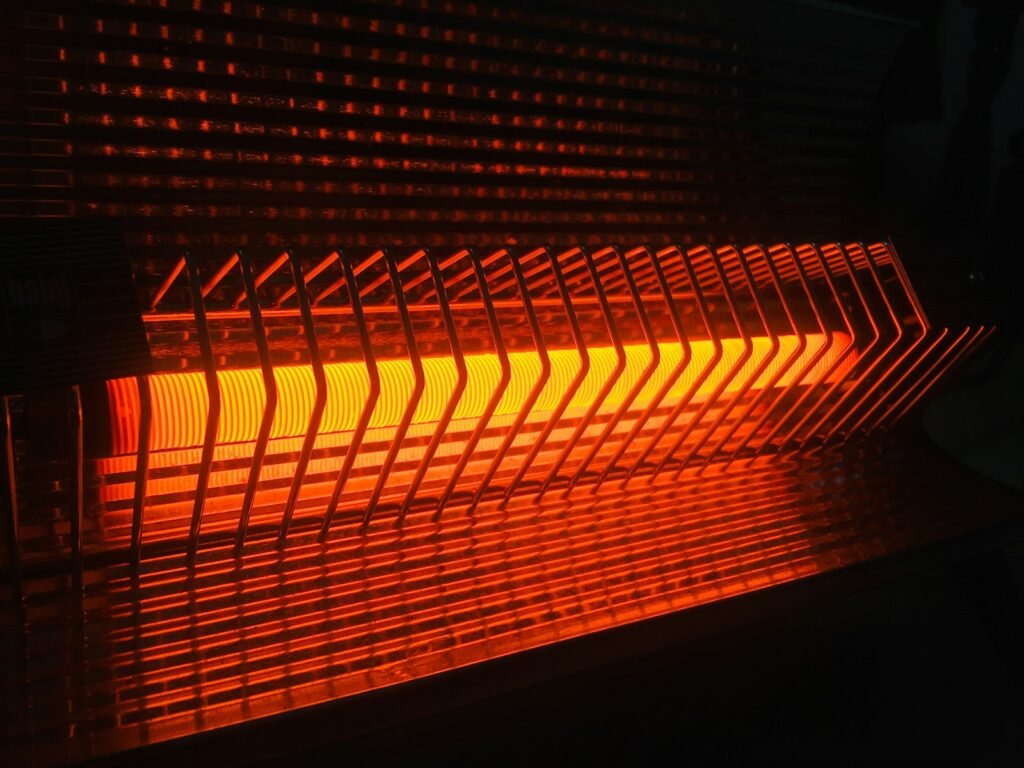
The National Fire Protection Association (NFPA) reports that heating equipment is a leading cause of US home fires, and space heaters are involved in most of the deadly ones. The U.S. Consumer Product Safety Commission (CPSC) gives similar advice. Even the best space heater for bedroom use is only as safe as where and how you run it. These rules apply to every heater in this guide, including the safest space heater for bedroom use:
- Keep the 3-foot rule. Keep anything that can burn, including bedding, curtains, clothes, paper and furniture, at least 3 feet (1 meter) away from the heater, and keep kids and pets out of that zone.
- Plug directly into a wall outlet. Never use an extension cord or power strip; they can overheat at 1500 W. Do not run other high-wattage appliances on the same circuit.
- Look for a safety listing. Choose a heater certified by a recognized lab such as UL or ETL (Intertek).
- Choose tip-over and overheat shutoff. Automatic shutoff is standard on most of our picks.
- Place it on a hard, level floor, not on a rug, bed, table edge or carpet where it can tip or block airflow.
- Turn it off when you leave the room or go to sleep, and check the cord and plug for heat or damage.
- Keep it dry. Use only heaters rated for bathrooms in damp rooms; the Amazon Basics listing, for example, says not to use it in bathrooms or laundry rooms.
- Test your smoke alarms in every bedroom and on every level of the home.
Safest space heater for bedroom use: overnight tips
NFPA advice is to turn portable heaters off before going to bed, so the safest approach for a cold bedroom is to warm the room before you sleep rather than heat it all night. Here is how to do that without waking up cold:
- Pre-heat, then shut off. Run the heater 30 to 60 minutes before bed with the door closed, then switch it off or let a timer do it. The DREO 12-hour timer, the Lasko 7-hour timer or the smart schedule on the DREO wall heater all handle this.
- Use a schedule in the morning. A smart heater can warm the room 20 minutes before your alarm.
- Pick a quiet model. Look for a listed noise level of about 40 dB or lower (34 dB on the DREO, 39 dB on the Dr Infrared) or a fan-free oil-filled radiator.
- Place it away from the bed. Keep 3 feet from bedding, never under a desk with blankets nearby, and never where you could knock it over getting up.
- Dim the display. Bright LEDs disturb sleep; the DREO wall heater auto-dims, and tape can cover small indicator lights on others.
- Layer the bed. Flannel sheets, a heavier comforter and blackout or thermal curtains keep the warmth you created. Our apartment warming guide lists more low-cost fixes.
- Keep the room a little cool. Many sleep experts suggest a bedroom in the mid-60s °F; you do not need to heat it to 75°F.
How to choose the best space heater for living room or bedroom
Before you buy, run through this short checklist to narrow down the best space heater for bedroom, nursery or family room use. It works whether you are choosing the best space heater for bedroom nights or a bigger unit for the family room.
- Room size and wattage. Use the 10 W per sq ft table above. Under 100 sq ft, a small heater with a 900 W low setting is enough; 100 to 150 sq ft suits any 1500 W model.
- Heater type. Ceramic for speed, oil-filled for silence, infrared for large or drafty rooms.
- Safety listing and shutoffs. ETL or UL listing, tip-over and overheat protection, cool-touch housing.
- Thermostat quality. A digital thermostat with 1-degree steps holds the room steadier than a dial and saves energy.
- Noise. For a bedroom, look for a listed dB figure near 40 or below, or a fan-free radiator.
- Timer, remote and smart features. A timer lets you pre-heat a bedroom and walk away; an app schedule makes it automatic.
- Footprint and placement. Towers and wall heaters save floor space; radiators need clear space around them.
- Your outlet. Use a wall outlet on a circuit without other big loads, such as a hair dryer or microwave.
For the living room in particular, oscillation or whole-room circulation matters more than raw power, because heat has to reach a couch, a chair and sometimes a desk. That is why the Lasko tower, the Vornado AVH10 and the Dr Infrared DR-968 are our best space heater for living room picks, while the DREO ceramic and the De’Longhi radiator are better suited to closed bedrooms. If your home is drafty, fix the drafts first; our guide to winterizing a home on a budget covers weatherstripping, window film and other cheap fixes. Outside, clearing the driveway before the cold sets in is easier with one of our best cordless snow blower picks.
How we chose the best space heater for bedroom and living room picks
We did not test these heaters hands-on. We started from popular space heater listings on Amazon, chose models that cover the main types (ceramic, tower, oil-filled, infrared, smart wall-mounted, whole-room circulation and a small budget heater) across well-known brands including DREO, De’Longhi, Lasko, Vornado and Dr Infrared, and read each product page for wattage, heat settings, thermostat range, safety listing (ETL or UL), tip-over and overheat protection, listed noise and timer features.
We wrote the room size, cost-to-run, heater type and bedroom sections ourselves, took the safety rules from NFPA and CPSC guidance, and used the EIA average electricity price as a labeled assumption. No brand paid for placement, and we left out prices and ratings because they change.
Helpful resources: NFPA: Heating safety tips and U.S. Department of Energy: Tips to save on winter energy bills.
Best space heater for bedroom FAQ
What is the best space heater for bedroom use?
For most bedrooms, the best space heater for bedroom use is the DREO 1500W ceramic heater: the listing describes a 34 dB motor, a 41–95°F thermostat in 1°F steps, tip-over and overheat protection, a 12-hour timer and ETL certification. If you want fan-free silence, choose the De’Longhi EW7707CM oil-filled radiator.
What is the best space heater for living room seating areas?
A tower or whole-room heater spreads warmth best. The Lasko 751320 ceramic tower oscillates and has a remote and 7-hour timer, the Vornado AVH10 circulates warm air through the whole room, and the Dr Infrared DR-968 adds radiant heat for larger or drafty living rooms.
What is the safest space heater for bedroom use?
Choose a heater listed by ETL or UL with automatic tip-over and overheat shutoff and a cool-touch exterior, such as the DREO ceramic, Dr Infrared DR-968 or Vornado AVH10. Keep it 3 feet from bedding, plug it directly into a wall outlet, and follow NFPA advice to turn it off before you go to sleep, using a timer to pre-heat the room.
What is the space heater cost to run per hour?
Multiply kilowatts by your electricity rate. At the EIA US average of 18.31 cents per kWh, a 1500 W heater on high costs about 27.5 cents per hour and a 750 W setting about 13.7 cents per hour. Eight hours a night on high for 30 days is about 360 kWh, or roughly $66.
What is the most energy efficient space heater?
All electric resistance heaters convert electricity to heat at the same rate per watt, so the most energy efficient space heater is the one that runs the least: one with a digital thermostat, a low or ECO setting and a timer, sized correctly for the room, used while you turn central heat down.
Is an oil-filled heater better than a ceramic heater?
Neither uses less electricity per watt. An oil-filled radiator is quieter and gives steady, lingering heat that suits bedrooms, but it warms up slowly. A ceramic heater heats a room in minutes and is lighter to move, but its fan makes some noise.
Also Explore
Latest Posts
 Best Boot Tray for Winter (2026): 8 Picks for Snowy, Muddy Entryways
 Best Watch Winder for Automatic Watches (2026): 7 Quiet Picks and a Gift Guide for Him
 Best Ice Ball Maker for Whiskey: 8 Clear Picks (2026 Gift Guide)
 Best Luxury Hair Perfume for Women: 8 Designer Hair Mists Worth Gifting (2026)
 Best Garment Racks With Covers (2026): Rolling, Heavy-Duty and Dust-Proof Clothes Racks
 Best Tennis Bracelets on Amazon (2026): CZ, Moissanite and Lab-Grown Diamond Gifts for Her


