Best Patio Heaters (2026): 8 Propane, Electric and Natural Gas Picks for Every Patio Size
Quick answer
The best patio heater for most open US patios is the Amazon Basics 46,000 BTU propane mushroom heater: the listing describes one-touch ignition, an adjustable heat knob, a tilt safety shut-off valve, a water-fillable base and heat for up to a 9-foot radius from a standard 20-lb tank.
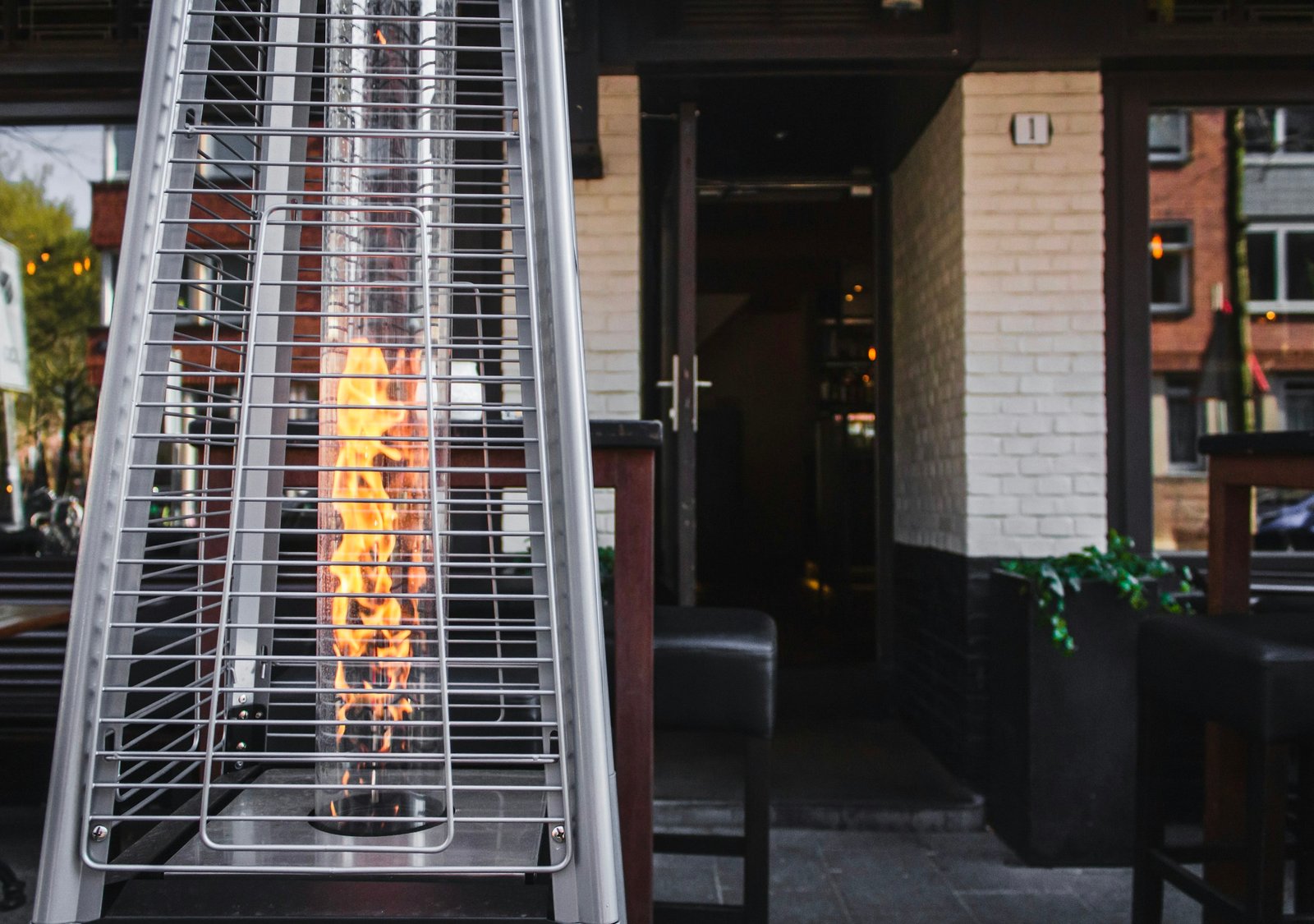
Want a real flame column? The Hykolity 48,000 BTU pyramid heater lists 8 to 10 hours per 20-lb tank. For a small table, the Cuisinart 11,000 BTU tabletop patio heater runs on a 1-lb cylinder. Under a roof, choose electric: the Dr. Infrared DR-238 is our best patio heater for covered porch ceilings and walls, and a Golden Flame 45,000 BTU model is the natural gas pick. Propane and natural gas heaters are for open air only, never indoors, in a garage or on an enclosed porch.
Disclosure: As an Amazon Associate I earn from qualifying purchases.
- Amazon Basics 46,000 BTU Propane Patio Heater — best overall propane patio heater: 9-ft heat radius listed, tilt shut-off, water box base, wheels.
Check current price on Amazon → - Dr. Infrared DR-238 1500W Carbon Infrared Heater — best electric patio heater for covered porches: 120 V plug-in, wall and ceiling brackets included, IP55, remote.
Check current price on Amazon → - Cuisinart COH-514 11,000 BTU Tabletop Patio Heater — best tabletop patio heater: warms up to 30 sq ft, anti-tilt shut-off, 8.5 lb.
Check current price on Amazon →

A patio heater is what turns a deck or patio from a summer-only space into somewhere you can actually sit in October, host Thanksgiving drinks or watch the Christmas lights in December. The best patio heater for your home depends less on the brand than on three questions: how big the seating area is, whether it is under a roof, and which fuel you can supply (a propane tank, an outdoor outlet or a natural gas line). To enjoy the view from that patio all winter, see our smart bird feeder with camera picks.
This guide compares eight heaters across every main type: propane mushroom and pyramid towers, a tabletop patio heater, a directional swivel-arm heater, electric infrared wall and ceiling mounts, a freestanding electric lamp and a natural gas tower. Then we add what most roundups skip: a BTU and watts by patio size table, a propane vs electric vs natural gas running cost method using EIA figures, clearance and carbon monoxide safety, and propane tank tips. Looking for indoor heat instead? Our best space heaters guide covers bedroom and living room models; patio heaters are a different category built for open air. For heating a room indoors instead, see our oil-filled radiator heater guide.
Best patio heater comparison table
Every heat output, coverage figure and safety feature below comes from the Amazon product pages (listing bullets or the technical details table). Where a listing does not state something, we say “not stated” rather than guess. Prices and ratings are left out on purpose because they change daily in heating season; use the links to see the current price.
| Patio heater | Type and fuel | Heat output (listed) | Coverage (listed) | Safety (listed) | |
|---|---|---|---|---|---|
| Amazon Basics 46,000 BTU Best Overall Propane | Mushroom tower, propane (20-lb tank) | 46,000 BTU | Up to 9-ft radius | Tilt shut-off valve, water box base, tank chain | Check current price on Amazon |
| Hykolity 48,000 BTU Pyramid Best Pyramid Flame | Pyramid glass tube, propane (20-lb tank) | 48,000 BTU | Not stated (8–10 h per tank listed) | Anti-tilt shut-off over 45°, cover included | Check current price on Amazon |
| Cuisinart COH-514 Tabletop Best Tabletop | Tabletop, propane (1-lb or 20-lb with regulator) | 11,000 BTU | Up to 30 sq ft | Anti-tilt shut-off, burner screen guard | Check current price on Amazon |
| Cuisinart Perfect Position COH-400 Best Directional Propane | Swivel-arm tower, propane (hidden 20-lb tank) | 38,200 BTU | 175 sq ft (tech details) | Sand-filled wheeled base; tilt shut-off not stated | Check current price on Amazon |
| Dr. Infrared DR-238 Best for Covered Porch | Carbon infrared, wall/ceiling, 120 V plug-in | 900 / 1,200 / 1,500 W | Not stated | IP55, no thermostat (per title) | Check current price on Amazon |
| Dr. Infrared DR-239 Best 240 V Wall/Ceiling | Carbon infrared, wall/ceiling, 240 V (NEMA 6-15P plug) | 3,000 W (10,260 BTU) | Not stated | IP55, overheat protection, ETL listed | Check current price on Amazon |
| BLACK+DECKER BHOF04 Best Freestanding Electric | Freestanding or wall-mount lamp, 120 V | 500 / 1,000 / 1,500 W | Up to 160 sq ft | Not stated beyond 45° tilt head | Check current price on Amazon |
| Golden Flame XL-Series NG Best Natural Gas | Mushroom tower, natural gas line (6-ft hose) | 45,000 BTU | Up to 15-ft diameter | Auto tilt shut-off, sand-fillable base | Check current price on Amazon |
The 8 best patio heaters, reviewed from the listings
The picks below run from a budget-friendly tabletop patio heater to premium 240-volt infrared and natural gas models. Propane and natural gas heaters are combustion appliances made for open-air patios; the electric heaters produce no fumes and are the only type we suggest under a solid roof.
1. Amazon Basics 46,000 BTU Outdoor Propane Patio Heater
If you have an open patio or deck and no outdoor outlet where you sit, a classic mushroom tower is still the best patio heater for the job, and this Amazon Basics model (model 62108) covers the basics well. The listing describes 46,000 BTUs of heat for up to a 9-foot radius, an adjustable temperature knob and one-touch ignition, so there are no matches involved. It runs on a standard 20-lb liquid propane tank, which is not included.
Safety details matter on a tall heater, and this one lists a tilt safety auto shut-off valve, a water box that weighs down the base and a chain to secure the tank. The powder-coated Slate Gray finish, wheels and a weight of about 36.9 pounds make it easy to roll into place. By our math (46,000 ÷ 91,500 BTU per gallon), it burns roughly half a gallon of propane per hour on high, so a full 20-lb tank lasts around 9 hours at full output and longer on lower settings.
- 46,000 BTU with adjustable output
- Tilt shut-off valve and water-weighted base
- One-touch ignition, wheels, tank chain
- About 9 hours per 20-lb tank on high (our estimate)
- 91.3 inches tall: check overhead clearance
- Open-air only; not for covered porches with low ceilings
Best for: Open patios, decks and pool areas with a 4 to 6 person seating circle
Check current price on Amazon →2. Hykolity 48,000 BTU Pyramid Patio Heater with Cover
A pyramid heater trades some radiant spread for something people love: a visible flame dancing inside a glass tube. The Hykolity lists 48,000 BTUs from a 20-lb tank and says it can run continuously for 8 to 10 hours, which lines up with our estimate of about half a gallon per hour. A side door gives easy access to swap the tank, and the variable heat setting and control valve let you dial it down once everyone is warm.
It stands about 90 inches tall, weighs about 76 pounds and comes with two detachable wheels and a waterproof cover. The listing describes an anti-tilt device that shuts the heater off when it is tilted more than 45 degrees. Because pyramid heaters throw heat sideways from the glass column rather than down from a reflector, they work best in the middle of a seating group, not pushed against a wall, which makes it the best patio heater for ambience in a central spot. Pair one with warm outdoor Christmas lights and the patio becomes a December hangout.
- 48,000 BTU, 8–10 hours per tank listed
- Glass-tube flame doubles as decor
- Cover and wheels included
- Anti-tilt shut-off past 45°
- Heavy (about 76 lb) and tall
- Glass tube needs careful handling and cleaning
Best for: Entertaining spaces where ambience matters as much as heat
Check current price on Amazon →3. Cuisinart COH-514 Portable Tabletop Patio Heater, 11,000 BTU
A tabletop patio heater is the right size when you only need to warm two to four people at a bistro table, on an apartment balcony where a tall tower would be overkill, or at a tailgate. Cuisinart lists 11,000 BTUs that warm up to 30 square feet, with a reflector top plate that spreads heat evenly over the table. A dial lets you choose low, high or anything in between. If space is tight, this is the best patio heater for a balcony or a two-person table.
It weighs about 8.5 pounds and measures roughly 12.4 by 16.3 by 25.2 inches. Safety features listed are an anti-tilt automatic shut-off and a burner screen guard. It runs on a 1-lb propane cylinder, or on a 20-lb tank with an optional regulator hose (not included). Our math: 11,000 BTU is about 0.12 gallons per hour, so a 1-lb cylinder (about a quarter gallon) gives roughly 2 hours on high, while a 20-lb tank would last well over a day of total run time. Before you put any heater on a table, check that the table is sturdy and not glass that could crack from heat, and keep napkins and centerpieces well away. Our Thanksgiving table decor ideas include low, non-flammable options for outdoor tables.
- Compact and light at 8.5 lb
- Anti-tilt shut-off and burner guard
- 1-lb cylinder or 20-lb tank (with adapter)
- Good for balconies, tailgates and camping
- Warms a table, not a whole patio
- 1-lb cylinders run out in about 2 hours on high
Best for: Bistro tables, balconies (where allowed by your building), tailgates and camping
Check current price on Amazon →4. Cuisinart Perfect Position 38,200 BTU Swivel-Arm Propane Patio Heater
Most propane towers heat in a circle, which wastes warmth when your seating is on one side, like a sofa against a railing. The Cuisinart COH-400 solves that with a swivel arm that lets you direct heat left or right, plus a 33-inch heat shield and a cone-shaped burner that send heat downward and outward. The listing lists 38,200 BTUs, and the technical details give 175 square feet of heating coverage.
The 20-lb tank hides inside an enclosed base with easy-access gas controls, and there is a stainless steel drink table. A sand-filled wheeled base adds stability and mobility, and the arm folds down for compact storage. The listing does not state a tilt shut-off on the bullets, so check the manual for its safety features. At about 100 pounds and 88 inches tall, it is a premium, fairly permanent piece. Our estimate: 38,200 ÷ 91,500 is about 0.42 gallons per hour, or roughly 11 hours per tank on high.
- Swivel arm aims heat at the seating
- Hidden tank and built-in drink table
- 175 sq ft coverage listed
- About 11 hours per tank on high (our estimate)
- About 100 lb: heavy to move
- Tilt shut-off not stated in the listing bullets
Best for: L-shaped patios, sofa sets and outdoor bars where guests sit on one side
Check current price on Amazon →5. Dr. Infrared Heater DR-238 1500W Carbon Infrared Patio Heater
For a covered porch, pergola with a solid roof, screened porch or three-season room, electric infrared is the safe answer because it has no flame and produces no carbon monoxide. The Dr. Infrared DR-238 is our best patio heater for covered porch use: it plugs into a standard 120-volt outlet, includes wall and ceiling mounting brackets and is IP55 rated for indoor and outdoor use.
The listing describes clean, instant, odorless carbon infrared heat with three power settings (900, 1,200 and 1,500 watts), a remote control, a mirror aluminum reflector rated at 90 percent reflectivity and a weatherproof aluminum body that weighs about 8 pounds. Note the product title says “without thermostat”, so it runs at the setting you choose until you switch it off. At the EIA US average residential rate of 18.31 cents per kWh, 1,500 watts costs about 27.5 cents an hour, and the 900-watt setting about 16.5 cents. Infrared heats people and objects in its path rather than the air, so aim it at the seats. To have it come on before guests arrive, a heavy-duty outdoor timer helps; our outdoor timer for Christmas lights guide explains how to match a timer rating to the load (a 1,500 W heater needs a timer rated for at least 12.5 amps).
- No flame, no fumes: safe under a roof
- 120 V plug-in, three power levels
- Wall and ceiling brackets included, IP55
- Remote control
- No thermostat (per the title)
- Heats a zone; best within a few feet of seats
Best for: Covered porches, pergolas with roofs, garages and screened porches with a GFCI outlet
Check current price on Amazon →6. Dr. Infrared Heater DR-239 3000W 240V Wall or Ceiling Infrared Patio Heater
If one 1,500-watt heater is not enough for your covered patio, the next step up is 240 volts. The DR-239 lists 3,000 watts, which equals 10,260 BTU of carbon infrared heat that warms people and objects instantly, with no warm-up time. It operates on 220 to 240 volts with an included power cord and a NEMA 6-15P plug, so you will need a matching 240 V receptacle on its own circuit, installed by a licensed electrician.
It is IP55 weatherproof, includes wall and ceiling brackets and a remote to switch between power levels or standby, and the listing describes overheat protection with automatic shut-off and an ETL listing. It is about 41 inches long and weighs about 7.6 pounds. Running cost at the EIA average of 18.31 cents per kWh is roughly 55 cents per hour on full power, so this is the best electric patio heater (and the best patio heater overall under a roof) for bigger covered dining areas where you would otherwise need two plug-in units.
- 3,000 W (10,260 BTU) on one fixture
- IP55, ETL listed, overheat shut-off
- Wall and ceiling brackets plus remote
- No flame: suitable under a roof
- Needs a 240 V receptacle and circuit
- Higher running cost per hour than 1,500 W models
Best for: Large covered patios, outdoor kitchens and garages with 240 V service
Check current price on Amazon →7. BLACK+DECKER Outdoor 2-in-1 Patio Electric Heater (BHOF04)
Want the tall look of a propane tower without tanks? This BLACK+DECKER lamp-style heater stands about 82.7 inches tall on a 19.7-inch base and plugs into a 120-volt outlet. The listing describes three heat settings (low 500 W, medium 1,000 W and high 1,500 W), a pull chain control and a head that tilts up to 45 degrees, and the product highlight says it heats up to 160 square feet.
The 2-in-1 part is that you can stand it on the floor or mount it on a wall, which makes it flexible if you later decide to fix it under a pergola, and a strong case as the best patio heater for renters who have an outdoor outlet. It weighs about 20.8 pounds. Because it is electric, running cost is easy to predict: about 9 cents an hour on low and about 27.5 cents on high at the EIA US average rate. The listing does not state tip-over protection, so place it on level ground out of walkways and keep the cord out of foot traffic.
- Freestanding or wall-mount
- Three settings: 500 / 1,000 / 1,500 W
- Up to 160 sq ft listed
- No tanks to refill
- Tip-over protection not stated
- Needs an outdoor GFCI outlet near the seats
Best for: Renters and homeowners with an outdoor outlet who want tower-style heat without propane
Check current price on Amazon →8. Golden Flame XL-Series 45,000 BTU Natural Gas Patio Heater
If your home already has natural gas and you use the patio often, a natural gas patio heater means no more tank swaps. The Golden Flame XL-Series lists 45,000 BTUs that warm up to a 15-foot diameter, with a wide aluminum reflector and a stainless steel burner. Ignition is push-button rapid spark with a pilotless burner, and a variable control adjusts heat from low to high.
A pre-installed 6-foot flexible hose exits the base and ends in a 3/8-inch male flare fitting that connects to your natural gas line; have a licensed gas fitter or plumber install the outdoor gas outlet and quick-connect. The listing describes an auto tilt shut-off, a sand-fillable base with a hidden cavity for extra ballast, two wheels, a 360-degree drink table and an 89-inch hammered silver/pewter finish, plus a 1-year limited warranty. For homes with gas, it is the best patio heater for set-and-forget use. It also says it is for outdoor use in well-ventilated areas. In therms, 45,000 BTU is 0.45 therms per hour, so multiply by the per-therm price on your gas bill.
- No tanks: runs off your gas line
- 45,000 BTU, 15-ft diameter listed
- Auto tilt shut-off, sand-fillable base
- Built-in drink table
- Gas line hookup by a pro adds to the project
- 6-ft hose limits where it can stand
Best for: Homes with natural gas and a frequently used patio or outdoor kitchen
Check current price on Amazon →What size is the best patio heater for your space? BTU and watts by patio size
Heating outdoors is not like heating a room: there are no walls to hold warm air, so a patio heater works by radiating heat onto people and furniture within a few feet. That means you size by the seating area you want to keep comfortable, not the whole yard. Use the table as a starting point, then size up one step for windy, exposed or very cold spots. The coverage figures in the right column come from our picks’ listings so you can compare.
| Patio space | Approx. seating area | Propane or natural gas | Electric infrared | Listed examples |
|---|---|---|---|---|
| Balcony or bistro table for 2 | Up to about 50 sq ft | 10,000–12,000 BTU tabletop | One 1,500 W unit aimed at the seats | Cuisinart COH-514: up to 30 sq ft |
| Small patio or deck seating for 4 | 50–150 sq ft | 30,000–40,000 BTU tower or swivel-arm | One or two 1,500 W units from two sides | BLACK+DECKER BHOF04: up to 160 sq ft |
| Dining table for 6 or a sofa set | 150–250 sq ft | One 40,000–48,000 BTU tower | One 3,000 W 240 V unit, or two 1,500 W | Cuisinart COH-400: 175 sq ft; Amazon Basics: 9-ft radius (about 250 sq ft) |
| Large patio or outdoor kitchen | 250–400 sq ft | Two tall heaters placed at opposite sides | Two or three 3,000 W units on separate circuits | Golden Flame XL: 15-ft diameter (about 175 sq ft) each |
| Pool deck or open lawn, windy | 400 sq ft and up | Several towers; group seating into heated zones | Usually impractical; heat seating zones only | Zone it rather than heat it all |
Two conversions help when comparing fuel types: 1 kWh equals 3,412 BTU, so a 1,500-watt electric heater puts out about 5,100 BTU per hour and a 3,000-watt unit about 10,260 BTU (exactly what the DR-239 listing states). A 46,000 BTU propane tower releases roughly nine times as much heat as a 1,500 W heater. Electric infrared makes up some of the gap because it beams most of its energy straight at people instead of heating the air above them, but for big open patios propane and natural gas still win on raw heat.
Mounting height matters for electric models: follow the manual’s minimum distance from the ceiling and from people, angle the heater toward the seats and avoid mounting it directly above walkways where someone could brush it.
Propane vs electric vs natural gas patio heaters (and the cost to run each)
There is no single best patio heater fuel: the cheapest depends on your local prices and how often you sit outside. Here is how the three fuels compare, using a transparent method you can redo with your own local prices. For electricity we use the U.S. Energy Information Administration average residential price of 18.31 cents per kWh (EIA Electric Power Monthly, Table 5.6.A, July 2026 data). For propane we use the EIA heat content of about 91,500 BTU per gallon (EIA lists 91,452). Natural gas is billed in therms, and 1 therm is 100,000 BTU.
| Propane | Electric infrared | Natural gas | |
|---|---|---|---|
| Typical heat output | 11,000–50,000 BTU | 1,500 W (about 5,100 BTU) to 3,000 W (about 10,260 BTU) | 30,000–50,000 BTU |
| Cost-to-run formula | BTU ÷ 91,500 = gallons per hour × your local price per gallon | Watts ÷ 1,000 × hours × your rate per kWh | BTU ÷ 100,000 = therms per hour × your price per therm |
| Worked example per hour | 46,000 BTU ≈ 0.50 gal; 11,000 BTU ≈ 0.12 gal | 1,500 W ≈ 27.5 cents; 3,000 W ≈ 55 cents (at 18.31 cents/kWh) | 45,000 BTU ≈ 0.45 therms |
| Run time per fill | 20-lb tank (about 4.7 gal) ≈ 9 h at 46,000 BTU | Unlimited (outlet) | Unlimited (gas line) |
| Installation | None; buy or exchange tanks | 120 V plug-in, or 240 V circuit by an electrician | Gas line and outlet by a licensed pro |
| Under a roof? | No: open air only | Yes, with the manual’s clearances | No: open air only |
| Combustion fumes | Yes (carbon monoxide risk if enclosed) | None at point of use | Yes (carbon monoxide risk if enclosed) |
| Best for | Open patios with no outlet; portability | Covered porches, pergolas, balconies | Permanent outdoor living spaces |
A worked monthly example: say you sit outside 3 hours a night, 4 nights a week, for 4 weeks (48 hours). A 46,000 BTU propane tower on high uses about 0.50 × 48 = 24 gallons, or about five 20-lb tanks. A 1,500 W infrared heater uses 1.5 × 48 = 72 kWh, about what a typical refrigerator uses in one to two months. A 45,000 BTU natural gas heater uses 0.45 × 48 = about 21.6 therms. Multiply each by your own local price to see which fuel is cheaper where you live; propane prices vary a lot by region and season, and EIA publishes a weekly heating oil and propane update you can check. Running on low cuts each number roughly in half. For a sense of how outdoor heating fits next to your indoor bill, see our average heating bill by state breakdown. And if snow buries the patio first, our best electric snow shovel and cordless snow blower guide covers decks and walkways.

Best propane patio heater: mushroom vs pyramid vs tabletop vs swivel arm
If you have settled on propane, the best patio heater shape matters as much as the BTU number. Here is how the four propane designs in this guide differ, so you can choose the best propane patio heater for the way you use your patio.
- Mushroom (umbrella) tower, like the Amazon Basics 46,000 BTU: a reflector hood pushes heat down and out in a circle. The widest coverage per tank and usually the best value. Place it in the middle of a seating circle.
- Pyramid glass-tube tower, like the Hykolity 48,000 BTU: the flame is visible inside a quartz or glass tube. More ambience, heat spreads more sideways and less downward, and the units are heavier.
- Tabletop patio heater, like the Cuisinart COH-514: a small mushroom at table height, roughly 10,000 to 12,000 BTU, for two to four people. Light and portable, but 1-lb cylinders run out fast.
- Swivel-arm directional, like the Cuisinart Perfect Position: aims heat at a sofa or bar instead of in a circle, and hides the tank in the base. Heavier and more permanent.
All four need a stable, level surface, a clear zone overhead and around the reflector, and open air. If you plan to roll a heater between spots, wheels and a fillable base (water or sand) matter more than a few thousand extra BTUs.
Best electric patio heater: wall, ceiling or freestanding?
The best electric patio heater is the one you can power safely where you sit. A 1,500-watt heater draws about 12.5 amps at 120 volts, which is most of a standard 15-amp circuit, so plug it directly into an outdoor-rated GFCI outlet with a weatherproof cover and avoid sharing that circuit with string lights or a hot tub. Most heater manuals advise against extension cords; if yours allows one, use only a heavy-duty, outdoor-rated cord of the gauge the manual specifies.
- Wall or ceiling mount (Dr. Infrared DR-238 and DR-239): out of the way, no tip-over risk, ideal for covered porches and pergolas with a solid roof. Respect the manual’s minimum clearances from the ceiling, walls and people.
- Freestanding lamp (BLACK+DECKER BHOF04): movable and needs no installation, but needs a level spot away from walkways and a cord path nobody trips over.
- 120 V vs 240 V: 120 V plug-in heaters top out at about 1,500 W. For 3,000 W and more in a single fixture you need a 240 V circuit, which is an electrician job but gives you double the heat per fixture.
Electric infrared also pairs well with low-power comfort: a throw over the knees adds warmth for a fraction of the energy. Our best heated blankets guide covers electric throws, but check that any blanket you use outside is kept dry and is plugged into a GFCI outlet, as its manual directs. Still planning the outdoor space itself? Our cost to build a deck guide covers wood vs. composite.
Best patio heater for covered porch, pergola or gazebo
This is the most common safety mistake with patio heaters. Propane and natural gas heaters burn fuel and release carbon monoxide and heat. Outdoors in open air, that disperses. Under a low roof, inside a screened or enclosed porch, a sunroom, a gazebo with side curtains, a tent or a garage, it can build up. The National Fire Protection Association describes carbon monoxide as an odorless, colorless gas created when fuels such as propane and natural gas burn incompletely, and says gas grills should only be used outside. Treat a propane or natural gas patio heater the same way: never inside a home, garage or enclosed space. So for any covered space, the best patio heater for covered porch use is electric infrared.
If your roof is high and the sides are fully open, some propane and natural gas heater manuals allow use under an overhang with a stated minimum ceiling clearance. If yours does, follow those numbers exactly; if the manual says outdoor use only in an open area, take that literally. When in doubt, choose a wall or ceiling infrared heater like the DR-238 (120 V) or DR-239 (240 V), mounted at the distances its manual gives. Also make sure your home has carbon monoxide alarms in a central location outside each sleeping area and on every level, as NFPA recommends, especially if a patio sits next to open windows or doors.
Patio heater clearance and safety rules
Every heater’s manual lists its own minimum clearances to combustibles (above the reflector, to the sides and to walls). Even the best patio heater is only as safe as where you put it. Those numbers are the rule; the checklist below covers the habits that keep any patio heater safe.
- Open air only for flame heaters. Never use a propane or natural gas patio heater indoors, in a garage, tent, enclosed porch, sunroom or under a low or solid roof unless the manual explicitly allows it with stated clearances.
- Watch what is overhead. Umbrellas, awnings, pergola slats, tree branches, string lights and hanging plants can scorch or melt above a tall heater. Check the manual’s overhead clearance before you place it.
- Keep a clear zone. NFPA’s general heating advice is to keep anything that can burn at least 3 feet from heating equipment; follow the larger distance if your manual says so. Keep pets and kids away from hot reflectors and glass tubes.
- Level, stable and weighted. Fill water or sand bases as directed, use the tank chain, avoid soft lawns and slopes, and do not use a tall heater in strong wind.
- Never move a lit heater. Turn it off, let it cool, then move it. Let it cool fully before covering it.
- Turn it off when you go inside. Close the propane tank valve too, not just the heater knob.
- Electric heaters: use an outdoor GFCI outlet, keep the cord dry and out of walkways, and mount wall or ceiling models with the brackets and distances in the manual.
- Gas lines: natural gas connections and 240 V circuits are jobs for licensed pros, and may need a permit where you live.
Propane tank tips for patio heaters
- Know what a “20-lb tank” holds. It holds about 20 pounds of propane, roughly 4.7 gallons. At 46,000 to 48,000 BTU that is about 9 hours on high; on a medium setting, expect noticeably longer.
- Check the level by weight. The tare weight (TW) is stamped on the collar. Weigh the tank on a bathroom scale: a full tank weighs about TW plus 20 pounds. A quick alternative is to pour warm water down the side and feel for the cool line where the propane level sits.
- Leak-test every connection. Brush soapy water on the regulator connection and open the valve: growing bubbles mean a leak. Tighten and retest, and never use a flame to check.
- Store tanks outdoors and upright. Never store propane cylinders indoors, in a garage or basement, or near a heat source. Keep spares upright in a shaded, ventilated spot away from doors and windows.
- Check the date. In the US, small DOT cylinders like 20-lb tanks must be requalified 12 years after the manufacture date stamped on the collar before they can be refilled. Exchange services handle this for you.
- Keep a spare for parties. Swapping a tank mid-evening is easier than ending the night early. Some heaters, like the Hykolity and Cuisinart COH-400, have side doors or hidden bases that make swaps quicker.
- Tabletop heaters and 1-lb cylinders: they run about 2 hours on high at 11,000 BTU. For longer use, an adapter hose to a 20-lb tank (sold separately for the Cuisinart) cuts waste and cost.
How to choose the best patio heater: a quick checklist
- Is your seating under a roof? This one question narrows the best patio heater choice fastest. Yes: choose electric infrared. No: any fuel works.
- What fuel can you supply? No outlet near the seats: propane. An outdoor outlet: 1,500 W electric. A gas line: natural gas. A 240 V circuit (or willingness to add one): 3,000 W infrared.
- How big is the seating area? Use the size table above and add capacity for wind.
- How often will you use it? A few times a season: propane is simplest. Several nights a week: electric or natural gas avoids tank runs.
- Safety features: look for tilt or tip-over shut-off on freestanding heaters, a weighted base, and an ETL or UL listing on electric heaters.
- Storage: tall towers need a cover and a spot to wait out summer; wall-mount infrared stays put.
For holiday hosting, a heater plus good lighting makes the patio feel like a room. Plan your strings with our best outdoor Christmas lights picks and see the cost to run Christmas lights if you are adding them to the same circuit as an electric heater. Prefer a real wood or gas flame to gather around? Compare our best fire pits before you decide.
How we chose the best patio heaters (not tested)
We did not test these heaters hands-on, so treat this as a research-based shortlist for finding the best patio heater for your space. We started from popular patio heater listings on Amazon, chose models that cover every main type (propane mushroom, pyramid, tabletop and directional, electric infrared wall and ceiling mounts at 120 V and 240 V, freestanding electric and natural gas), and read each product page for heat output, coverage, fuel and power requirements, safety features, size and weight. Where a listing did not state something, we said so.
We wrote the sizing, fuel comparison, cost-to-run, clearance and propane sections ourselves, using EIA figures for electricity prices and propane heat content and NFPA guidance for carbon monoxide and heating safety. No brand paid for placement, and we left out prices and ratings because they change.
Helpful resources: NFPA: Carbon monoxide safety, NFPA: Heating safety, EIA: Average price of electricity by state, EIA: British thermal units (Btu) and fuel heat content and EIA: Heating oil and propane update.
Best patio heater FAQ
What is the best patio heater?
For most open patios, the best patio heater is a 40,000 to 48,000 BTU propane tower such as the Amazon Basics 46,000 BTU model, which lists a 9-foot heat radius, tilt shut-off and a water-weighted base. For covered porches choose an electric infrared heater like the Dr. Infrared DR-238, and if you have a gas line, a natural gas heater like the Golden Flame XL-Series.
What is the best propane patio heater?
The Amazon Basics 46,000 BTU mushroom heater is the best propane patio heater for wide, even coverage on an open patio. Choose the Hykolity 48,000 BTU pyramid if you want a visible flame (it lists 8 to 10 hours per 20-lb tank), or the Cuisinart Perfect Position 38,200 BTU swivel-arm model to aim heat at a sofa or bar.
What is the best electric patio heater?
The Dr. Infrared DR-238 is the best electric patio heater for most homes: a 120 V plug-in with 900, 1,200 and 1,500 W settings, IP55 rating, remote and wall and ceiling brackets. For bigger covered spaces, the 3,000 W DR-239 needs a 240 V circuit, and the BLACK+DECKER BHOF04 is a freestanding 1,500 W option.
What is the best patio heater for covered porch use?
Electric infrared. Propane and natural gas heaters burn fuel and can release carbon monoxide, so they belong in open air. A wall or ceiling infrared heater such as the Dr. Infrared DR-238 (120 V) or DR-239 (240 V), mounted at the clearances in its manual, is the best patio heater for covered porch, pergola and gazebo spaces.
Is a tabletop patio heater worth it?
Yes, for small spaces. A tabletop patio heater like the Cuisinart COH-514 lists 11,000 BTU for up to 30 square feet, enough for two to four people at a bistro table or balcony. It burns about 0.12 gallons of propane per hour, so a 1-lb cylinder lasts about 2 hours on high; an adapter hose to a 20-lb tank lasts far longer.
How much does it cost to run a patio heater?
For propane, divide BTU by 91,500 to get gallons per hour: a 46,000 BTU heater uses about 0.5 gallons per hour on high. For electric, multiply kilowatts by your rate: a 1,500 W heater costs about 27.5 cents per hour at the EIA US average of 18.31 cents per kWh. For natural gas, divide BTU by 100,000 to get therms per hour.
Also Explore
Latest Posts
 7 Best Christmas Stocking Holders for Every Mantel (2026)
 Best Hanging Toiletry Bag for Women (2026): 8 Organized Picks for Travel and Cruises
 Best Butter Dish with Lid (2026): 8 Picks for Counter and Fridge
 Best Luxury Nail Polish Gift Set: 7 Picks for Christmas (2026)
 Best Boot Tray for Winter (2026): 8 Picks for Snowy, Muddy Entryways
 Best Watch Winder for Automatic Watches (2026): 7 Quiet Picks and a Gift Guide for Him