How Much Does It Cost to Run Christmas Lights? (2026 Calculator)

Quick answer
The cost to run Christmas lights is about $2.11 for a whole season with 1,000 LED mini lights, versus about $17.58 for 1,000 incandescent mini lights, if they run 6 hours a night for 40 nights. That math uses the latest U.S. average residential electricity rate of 18.31 cents per kWh (EIA Electric Power Monthly, July 2026 data), with 1,000 LED minis drawing about 48 watts and 1,000 incandescent minis about 400 watts.

Worried your display will spike the power bill? For most homes it will not, as long as the lights are LED. The big costs come from old incandescent strands, inflatables and leaving everything on all night. Below you get a free Christmas light cost calculator, cost tables by bulb type and by state, and the easy ways to cut the bill. Last updated: October 2026.
Christmas light cost calculator
Pick a light type (or type your own watts from the box label), enter how many strands or items you have, and set your hours and nights. The rate starts at the U.S. average; choose your state or type the cents per kWh from your own bill for the most accurate answer.
Christmas Lights Electricity Cost Calculator
Estimate how much your lights add to your electric bill this season.
Formula: watts x strands x hours x nights / 1,000 = kWh; kWh x rate = cost. Watts are typical values; the exact number is printed on the box or the plug tag. Rates: EIA, July 2026 data.
Want a figure for a mixed display? Run the calculator once per light type and add the totals together. Tip: with the defaults above (10 LED mini strands, 6 hours, 40 nights) the answer is about $2.11, the same 1,000-light example as the quick answer. Switch the type to incandescent mini and it jumps to about $17.58.
How to work out the cost to run Christmas lights
Every Christmas lights electricity cost estimate uses the same three numbers: the watts your lights draw, the hours they are on, and what you pay per kilowatt-hour (kWh). The formula is simple:
- Watts x hours / 1,000 = kWh used. A 48-watt set of LED minis on for 240 hours (6 hours x 40 nights) uses 11.52 kWh.
- kWh x your rate = cost. 11.52 kWh x $0.1831 = about $2.11 for the season.
- Find the watts on the box, the plug tag or the product listing. If it lists amps instead, multiply amps by 120 volts.
Your own bill shows your real rate. Many utilities add delivery charges or use tiered or time-of-use pricing, so the per-kWh figure on your statement beats any average. The calculator above lets you type it in. The same watts x hours x rate math shows the space heater cost to run per hour in our heater buying guide.
Cost to run Christmas lights by bulb type
Here is what a single strand or decoration costs for a typical season of 6 hours a night for 40 nights (240 hours) at the U.S. average of 18.31 cents per kWh. Wattages are typical figures for common 120-volt products sold in the U.S.; check your own box, because brands vary.
| Light type | Typical watts | Season kWh | Season cost (U.S. avg) |
|---|---|---|---|
| LED mini, 100 count | 4 to 7 W (typical 4.8 W) | 1.15 kWh | $0.21 |
| Incandescent mini, 100 count | about 40 W (typical) | 9.6 kWh | $1.76 |
| C9 LED, 25 bulbs | 10 to 25 W (typical 15 W) | 3.6 kWh | $0.66 |
| C9 incandescent, 25 bulbs (7 W bulbs) | about 175 W (typical) | 42 kWh | $7.69 |
| Inflatable, about 6 ft | 40 to 150 W (typical 100 W) | 24 kWh | $4.39 |
| LED or laser projector | 5 to 20 W (typical 10 W) | 2.4 kWh | $0.44 |
Two things stand out. LED minis cost pennies per strand, and old C9 incandescent bulbs are the most expensive lights per strand by far. A single big inflatable can cost more to run than ten strands of LED minis, because its fan runs the whole time it is lit. Indoor smart bulbs cost even less to run; our Philips Hue vs Govee guide works out the yearly cost per bulb and adds holiday scene ideas.
Example: a typical front-yard display
Say you run 10 LED mini strands in the shrubs (48 W), 4 strands of C9 LEDs on the roofline (60 W), 2 inflatables (200 W) and one projector (10 W). That is 318 watts. Over 240 hours it uses about 76 kWh, so the cost to run Christmas lights for this display is about $13.97 for the season at the U.S. average. Nearly two-thirds of that comes from the two inflatables. Choosing a yard piece? Our best Christmas inflatables guide compares sizes from 4 ft to 10 ft and how to secure them in wind.
Christmas lights electricity cost by state
Rates vary a lot by state, so the cost to run Christmas lights for the same display can be twice as high in California as in Florida. This table uses the latest EIA average residential rates for ten large states and the same 1,000-light example (6 hours x 40 nights).
| State | Avg residential rate (cents/kWh) | 1,000 LED minis (11.52 kWh) | 1,000 incandescent minis (96 kWh) |
|---|---|---|---|
| California | 33.61 | $3.87 | $32.27 |
| New York | 29.90 | $3.44 | $28.70 |
| Michigan | 23.05 | $2.66 | $22.13 |
| Pennsylvania | 21.72 | $2.50 | $20.85 |
| Ohio | 19.45 | $2.24 | $18.67 |
| Illinois | 19.22 | $2.21 | $18.45 |
| Georgia | 16.27 | $1.87 | $15.62 |
| Texas | 15.88 | $1.83 | $15.24 |
| North Carolina | 15.16 | $1.75 | $14.55 |
| Florida | 15.03 | $1.73 | $14.43 |
| U.S. average | 18.31 | $2.11 | $17.58 |
If your state is not listed, open the EIA table, find your state's residential figure and type it into the calculator. Rates in the table are averages that include fixed and delivery costs spread across all usage, so treat results as close estimates rather than exact bill amounts.
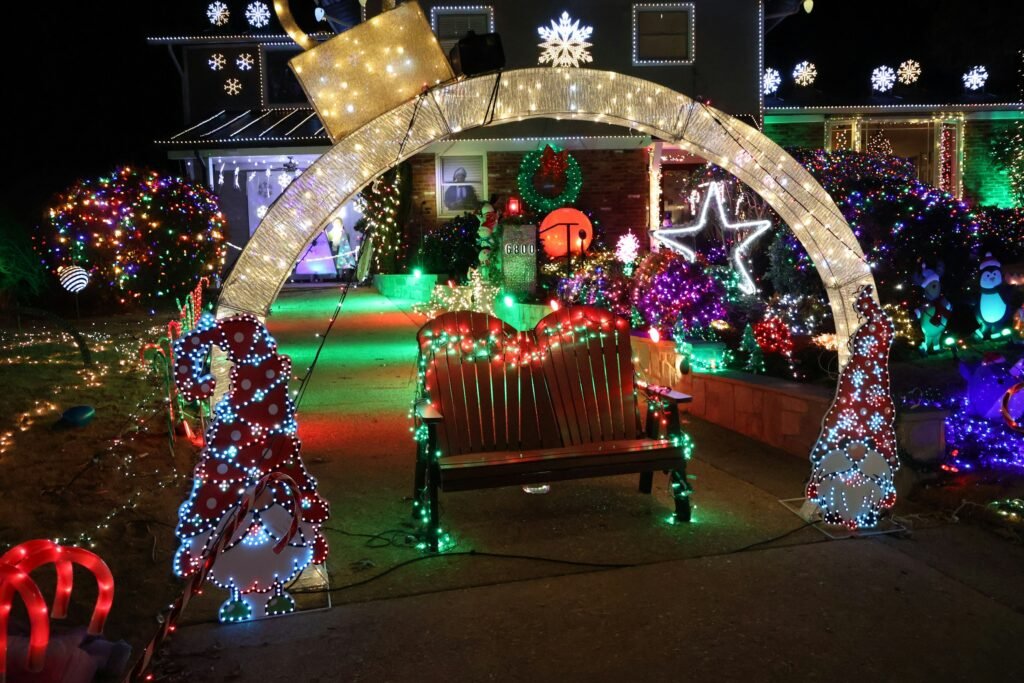
LED vs incandescent Christmas lights cost
The LED vs incandescent Christmas lights cost gap is the single biggest factor in your bill. A 100-count LED mini strand typically draws about 4 to 7 watts, while a 100-count incandescent strand draws about 40 watts. That makes LEDs roughly 85 to 90 percent cheaper to run for the same number of bulbs. For specific strands, compare our best Christmas tree lights picks, including low-watt warm white LED sets.
| 1,000 mini lights, 6 h a night | LED | Incandescent |
|---|---|---|
| Typical watts | about 48 W | about 400 W |
| Cost per night | about $0.05 | about $0.44 |
| Cost per 30 nights | about $1.58 | about $13.18 |
| Cost for 40 nights | about $2.11 | about $17.58 |
| Heat from bulbs | cool to the touch | warm to hot |
| Strands you can link end to end | often 20 or more (check the box) | often 3 to 5 (check the box) |
The cost to run Christmas lights is not the only reason to switch. LEDs run cooler, are less likely to dry out a real tree, and many sets let you link far more strands on one outlet. Incandescent strands still appeal for their warm color and lower upfront price, and if you only own a few, running them costs only a few dollars a season. The savings matter most for big displays: swapping 1,000 incandescent minis for LEDs saves about $15 a season at the U.S. average, and about $28 in California.
Shopping for replacements? Our guide to the best outdoor Christmas lights compares LED string, C9 and icicle styles that are rated for outdoor use.
How to cut the cost of running Christmas lights
- Use a timer or smart plug. It is the easiest way to lower the cost to run Christmas lights. Most people only see your lights from dusk to about 10 or 11 p.m. Cutting from 12 hours a night to 6 halves the cost, and an outdoor-rated timer means you never forget to switch off.
- Switch the biggest users to LED first. Old C9 incandescent strands and incandescent minis on the roofline are the heaviest loads. Replace those before anything else.
- Run fewer hours, not fewer lights. A shorter, well-timed window keeps the full display without the full cost.
- Watch the inflatables. Each one can draw 40 to 150 watts. Put them on their own timer or run them on weekends only.
- Do not leave lights on overnight. It wastes power and the safety groups below advise turning lights off when you sleep or leave home.
- Plan the layout before you buy. Measure first so you do not overbuy strands. Our how many lights for a Christmas tree chart helps for the tree itself.
Hanging the lights yourself? Damage-free hooks make LED strands quick to put up and take down. See our Command outdoor light clips review for how they hold on gutters, siding and trim. If you would rather hire it out, our Christmas light installation cost guide covers what pros charge, and the Christmas decorating cost guide covers the whole holiday budget.
Christmas light safety tips
Lower power use also means less heat, but safety still comes first. The NFPA winter holiday safety guidance and the UL Standards & Engagement holiday safety guide both stress these basics:
- Use lights that carry a mark from a recognized testing lab, and use outdoor-rated lights and cords outside.
- Check every strand for frayed wires, broken sockets or loose connections before you hang it, and throw out damaged sets.
- Follow the label for how many strands you can connect end to end.
- Plug outdoor lights into a GFCI-protected outlet, and keep cords out of standing water and snow.
- Turn lights off when you go to bed or leave the house.
- Keep a real tree watered so it does not dry out near heat or lights.
How we researched this guide
We did not meter lights in a lab. We calculated the cost to run Christmas lights from typical wattages of common 120-volt light sets and decorations sold in the U.S., and from the U.S. Energy Information Administration's latest average residential electricity prices (Electric Power Monthly, Table 5.6.A, July 2026 data). Safety tips come from NFPA and UL Standards & Engagement. We will update the rates as EIA publishes new months.
Helpful resources: For the latest rate in your state, see the EIA average residential electricity price table, and for safe setups read the NFPA winter holiday fire safety page.
Cost to run Christmas lights: frequently asked questions
How much does it cost to run Christmas lights per month?
About $1.58 a month for 1,000 LED mini lights on 6 hours a night, and about $13.18 a month for 1,000 incandescent minis, at the U.S. average rate of 18.31 cents per kWh (EIA, July 2026 data). Big displays with inflatables can cost $10 to $20 or more a month.
How much does it cost to run Christmas lights all night?
For 12 hours, 1,000 LED minis cost about 11 cents a night and 1,000 incandescent minis about 88 cents a night at the U.S. average rate. Safety groups advise turning lights off when you go to bed, so a timer is the cheaper and safer choice. To pick one, see our outdoor timer for Christmas lights roundup, which also shows the season savings of a 6-hour schedule.
What is the LED vs incandescent Christmas lights cost difference?
LED minis use about 4 to 7 watts per 100 bulbs versus about 40 watts for incandescent, so they cost roughly 85 to 90 percent less to run. For 1,000 lights over 40 nights that is about $2.11 versus $17.58 at the U.S. average rate.
How do I calculate Christmas lights electricity cost?
Multiply watts by hours on, divide by 1,000 to get kWh, then multiply by your rate in dollars per kWh. Example: 48 watts x 240 hours / 1,000 = 11.52 kWh, and 11.52 x $0.1831 = about $2.11.
How accurate is a Christmas light cost calculator?
It is as accurate as the watts and rate you enter. Use the wattage printed on your light boxes and the per-kWh rate on your own electric bill. Default values here are typical wattages and EIA state averages, so results are close estimates.
Do inflatable Christmas decorations use a lot of electricity?
More than most lights. A typical 6-foot inflatable draws about 40 to 150 watts because its fan runs constantly. At 100 watts, 6 hours a night for 40 nights, one costs about $4.39 at the U.S. average rate, more than 20 strands of LED minis.
Sources: U.S. EIA Electric Power Monthly, Table 5.6.A (July 2026 data), NFPA winter holiday safety, UL Standards & Engagement holiday safety guide. Wattages are typical values, not lab measurements. See how we research costs.
Latest Posts
 Best Boot Tray for Winter (2026): 8 Picks for Snowy, Muddy Entryways
 Best Watch Winder for Automatic Watches (2026): 7 Quiet Picks and a Gift Guide for Him
 Best Ice Ball Maker for Whiskey: 8 Clear Picks (2026 Gift Guide)
 Best Luxury Hair Perfume for Women: 8 Designer Hair Mists Worth Gifting (2026)
 Best Garment Racks With Covers (2026): Rolling, Heavy-Duty and Dust-Proof Clothes Racks
 Best Tennis Bracelets on Amazon (2026): CZ, Moissanite and Lab-Grown Diamond Gifts for Her


