Roomba vs Roborock (2026): Which Robot Vacuum and Mop Is Better for Your Home?
Quick answer
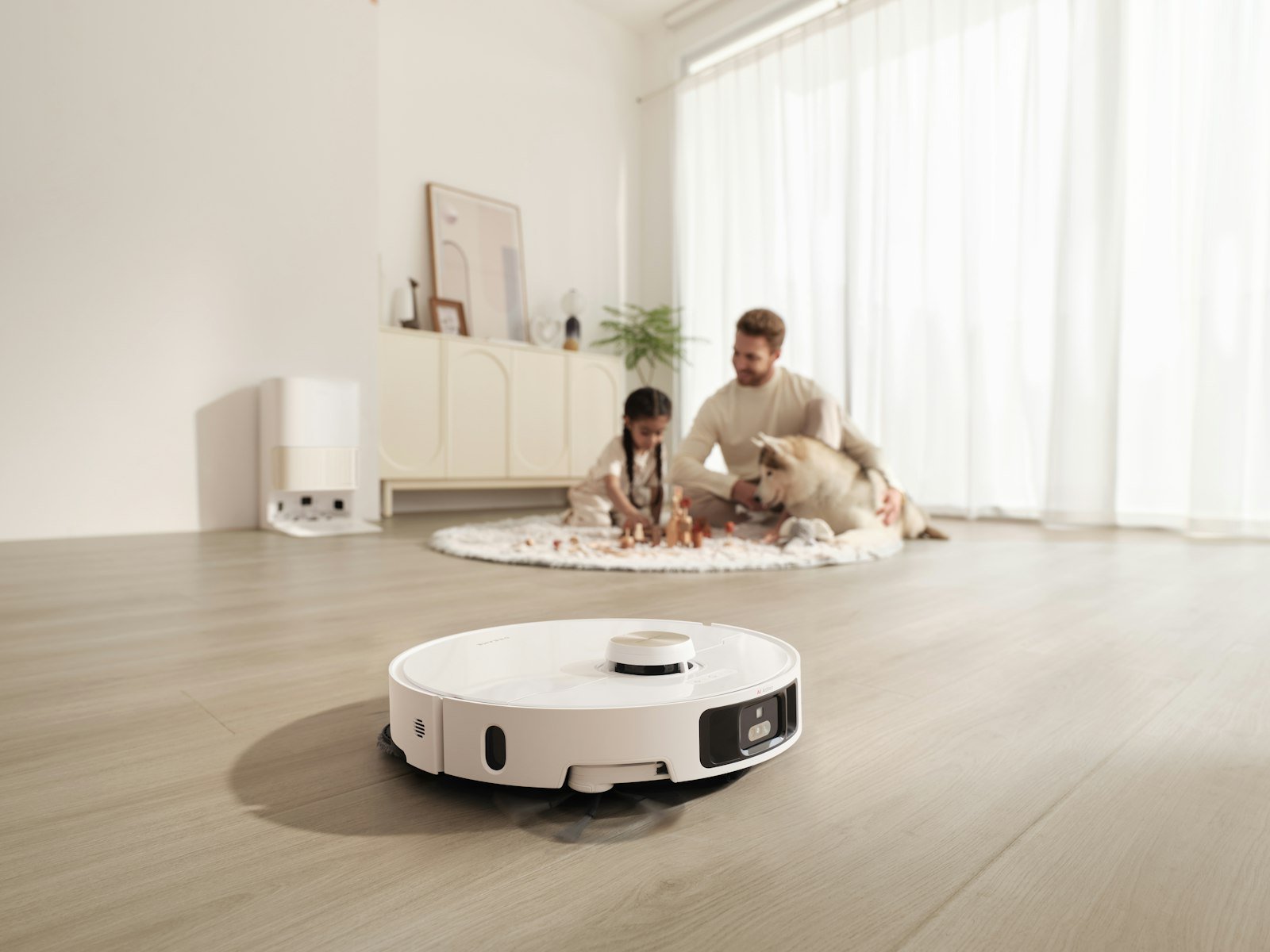
Roomba vs Roborock in 2026 comes down to the dock and the house. The roborock Qrevo S Pro is the better fit for most mixed-floor homes: its dock washes the mops with 167°F water, dries them with warm air, and the app adds multi-floor mapping and no-go zones. The iRobot Roomba 415X is the pick if you want the longest hands-off emptying (up to 90 days in the bag), a slightly lower listed height for tight furniture and higher listed suction (20,000 Pa vs 18,500 Pa). Both vacuum and mop, lift their mops 10 mm on carpet and use LiDAR mapping. If you share your home with a dog or cat, our guide to the best robot vacuum for pet hair compares 8 more robots by brush type, base days and pet-mess avoidance. For stairs, cars and upholstery, see our best cordless stick vacuum picks. And for a weekly deep clean of tile between robot runs, our steam mop vs spin mop guide explains which floors are safe to steam. If you are still choosing a model, our best robot vacuum and mop combo guide compares 8 more robots by dock type, mop style and lift height.
Disclosure: As an Amazon Associate I earn from qualifying purchases.
Best for: Mixed hardwood, tile and rugs, pet homes and multi-level houses that want the mops washed hot after every run
Check current price on Amazon →Also great: iRobot Roomba 415X Vacuum & Mop for the longest time between bag changes and lower furniture.
Check current price on Amazon →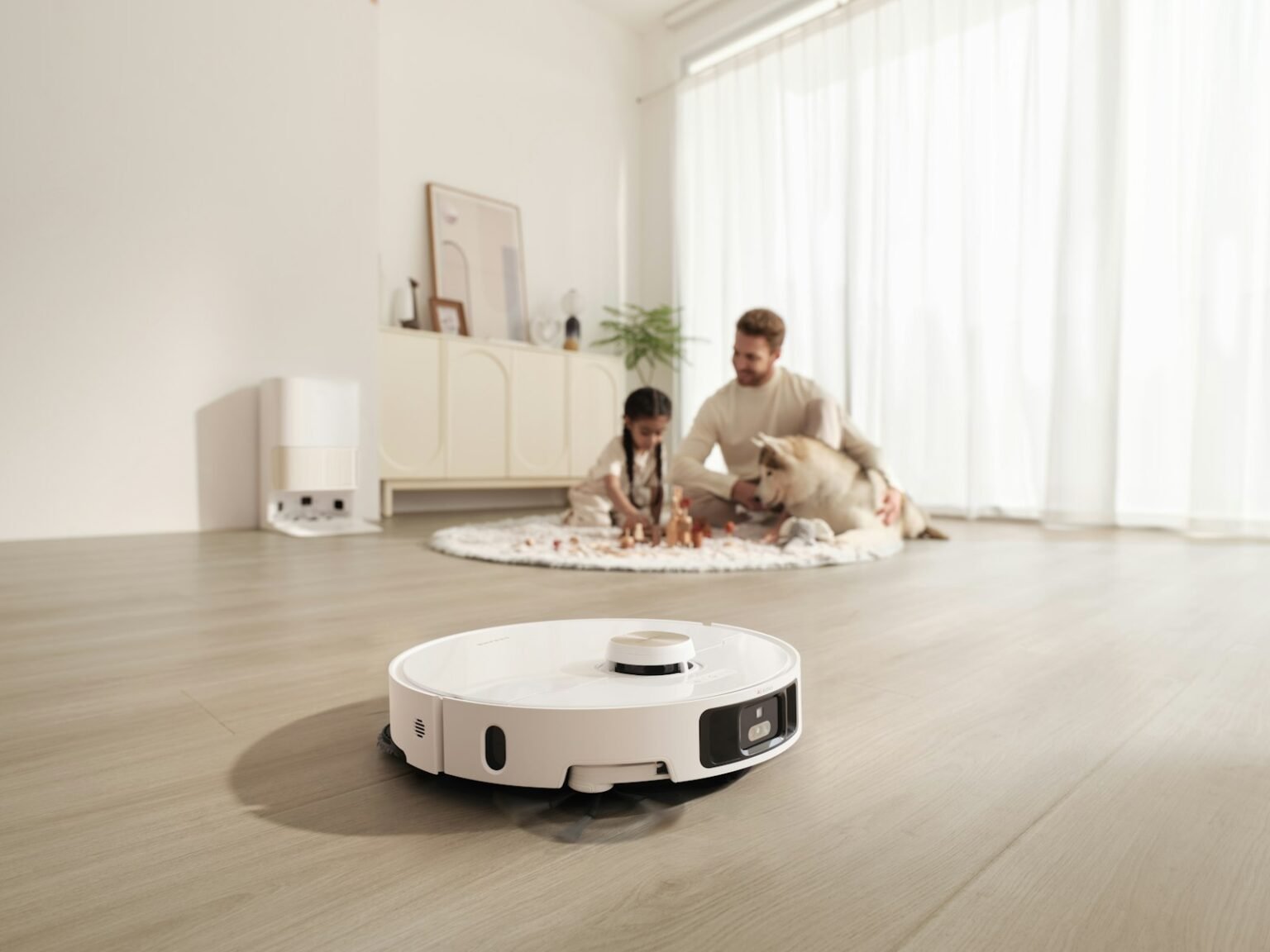
A robot that vacuums and mops every day sounds like a luxury until you live with crumbs under the table, dog hair along the baseboards and sticky prints by the fridge. In the Roomba vs Roborock question, the two names most US shoppers end up comparing are the iRobot Roomba 415X and the roborock Qrevo S Pro. They look similar on paper, so we lined up every fact from both Amazon listings and added what the listings leave out: under-furniture clearance, which home each one suits, bag and pad upkeep, and what the docks add to your electric bill.
Roomba vs Roborock at a glance
In any Roomba vs Roborock comparison, both robots are all-in-one machines: a round vacuum with two spinning mop pads, parked on a tall dock that empties the dustbin into a bag, refills clean water and washes the dirty pads. The differences are in the details, and they matter more than the suction numbers on the box.
| Pick | Best for | Why it stands out | |
|---|---|---|---|
| roborock Qrevo S Pro (2026) Best Overall | Mixed floors, pets, multi-level homes | 167°F mop wash, warm-air drying, multi-floor maps, no-go zones | See photos |
| iRobot Roomba 415X Vacuum & Mop Best for Fewer Bag Changes | Busy households, low furniture, pet hair | Up to 90 days self-emptying, 20,000 Pa, SmartScrub, 4 cleaning modes | See photos |
Roomba vs Roborock side-by-side spec table
Every line below comes from the two Amazon listings (title, feature bullets and the product details table). Where a listing does not state something, we say so instead of guessing.
| Spec | iRobot Roomba 415X | roborock Qrevo S Pro (2026) |
|---|---|---|
| Listed suction | 20,000 Pa | 18,500 Pa |
| Mop type | DualClean spinning mop pads with SmartScrub extra pressure | Dual liftable spinning mops with adjustable water flow |
| Mop lift on carpet | Lifts pads 10 mm before crossing rugs | 10 mm mop lifting, boosted suction on carpet |
| Self-empty | Up to 90 days into the dock bag | Sealed 2.7 L bag, lasts 7 to 9 weeks |
| Mop washing | AutoWash dock washes pads after every run | 167°F high-temperature mop self-cleaning |
| Mop drying | Heat-dries pads at 113°F | 113°F warm air drying |
| Water | Dock refills water on its own | Self-refilling dock |
| Navigation | LiDAR mapping and obstacle recognition | PreciSense LiDAR plus Reactive Tech obstacle avoidance |
| Map tools named in listing | Room targeting, scheduling, 4 cleaning modes | Multi-floor mapping, no-go zones, SmartPlan 2.0 |
| Brushes | Tangle-free rubber brushes, extending edge brushes | All-rubber main brush, zero-tangle side brush, easy-clean omni wheel |
| Listed height | 3.29 in (item dimensions) | 3.8 in low-profile cleaning |
| Filter | Cartridge | Washable |
| Battery life (listed) | 6 hours | 180 minutes |
| Noise (listed) | Not stated | 55 dB in bullets, 60 dB in spec table |
| Control | App, voice, buttons | App, voice, buttons; 2.4 GHz Wi-Fi only |
| Listed weight | 23.7 lb | 25.6 lb |
Two notes on reading this table. First, Pa (pascal) numbers are each brand’s own test figure, and a 1,500 Pa gap is small in daily use; brush design and how the robot handles carpet matter as much. Second, the weights listed on Amazon are almost certainly the robot plus its dock, so do not use them to judge how heavy the robot is.
Our verdict: is Roborock better than Roomba?
For most homes, yes, by a small margin. In this Roomba vs Roborock matchup, the roborock dock does more for the mop side of the job: it washes the pads with 167°F water instead of only drying them warm, and its app lists multi-floor mapping and no-go zones, which help in two-story houses and rooms with pet bowls. The Roomba wins on two things the roborock cannot match on paper: the bag holds up to 90 days of debris versus 7 to 9 weeks, and its listed height is about half an inch lower, which can decide whether it fits under your sofa.
So the honest answer to “is Roborock better than Roomba” depends on which chore you hate more. If it is scrubbing smelly mop pads, lean roborock. If it is emptying bags and pulling the robot out from under low furniture, lean Roomba. For stairs, spills and quick touch-ups between robot runs, see our Dyson V15 vs V8 comparison.
1. roborock Qrevo S Pro (2026): Best Overall
The Qrevo S Pro is built around its dock. After each run, the listing says it cleans the mops with 167°F water, then dries them with 113°F warm air, while the dustbin empties into a sealed 2.7 liter bag that roborock says lasts 7 to 9 weeks. The robot itself has 18,500 Pa of listed suction, an all-rubber main brush and a zero-tangle side brush aimed at long hair and pet fur, and it lifts its two spinning mops 10 mm when it reaches carpet.
Software is the other draw. PreciSense LiDAR handles mapping, Reactive Tech obstacle avoidance steers around shoes, toys and furniture legs, and the app supports multi-floor maps, no-go zones and SmartPlan 2.0, which roborock says adjusts settings from your layout, floor types and cleaning history. One setup detail: the robot connects to 2.4 GHz Wi-Fi only.
- Hot-water mop washing plus warm-air drying
- Multi-floor mapping and no-go zones listed
- Anti-tangle main brush, side brush and wheel for pet hair
- 3.8 in low-profile height reaches under many beds and sofas
- Bag lasts 7 to 9 weeks, shorter than the Roomba’s 90 days
- 2.4 GHz Wi-Fi only
- Listing gives two noise figures (55 and 60 dB)
Best for: Mixed hardwood, tile and rugs, pet homes and multi-level houses
Check current price on Amazon →2. iRobot Roomba 415X Vacuum & Mop: Best for Fewer Bag Changes
The Roomba 415X (iRobot also calls it the Roomba Plus 415X) pairs 20,000 Pa of listed suction with DualClean spinning mop pads and SmartScrub, which iRobot says adds extra pressure on dried food, muddy paw prints and kitchen splatter. Its AutoWash dock empties debris for up to 90 days, refills water and washes the pads, then heat-dries them at 113°F after every run to keep odors down.
iRobot leans on a slim body here: the listing calls it 46% slimmer than the Roomba 105, with extending brushes that reach into corners and along baseboards. LiDAR mapping and obstacle recognition steer around cords, shoes and toys, and four modes (vacuum only, mop only, vacuum and mop together, or vacuum first then mop) let you match the clean to the room.
- Up to 90 days between bag changes
- Highest listed suction of the two
- Four cleaning modes, including vacuum-then-mop
- Lower listed height (3.29 in) for tight furniture
- Listing does not say how hot the wash water is, only the drying temperature
- Multi-floor mapping is not named in the listing
- Cartridge filter needs replacing rather than rinsing
Best for: Busy households, pet hair and homes with low sofas and beds
Check current price on Amazon →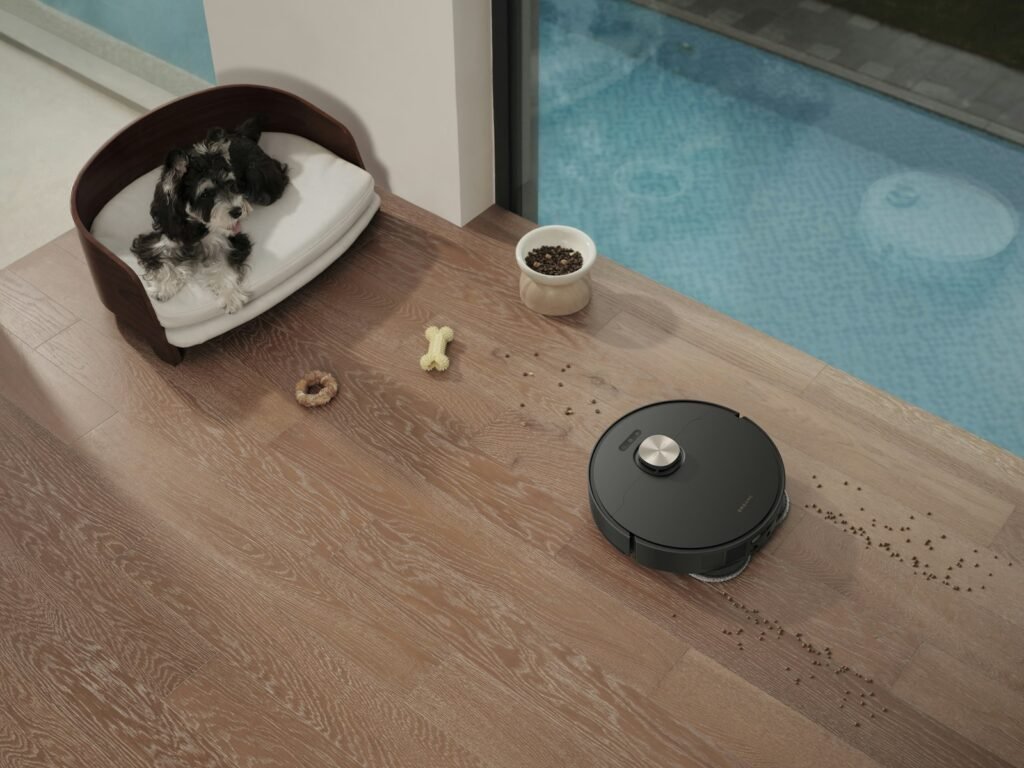
Which home is each robot for?
Specs only tell half the story. Here is how the Roomba vs Roborock choice plays out in the kinds of homes we write for.
Roomba vs Roborock for pet hair
Both brands built these robots for shedding dogs and cats. The Roomba 415X uses tangle-free rubber brushes that iRobot says capture fur without clogging, so you are not cutting hair off a bristle roll every week. The Qrevo S Pro goes a step further on paper with three anti-tangle parts: an all-rubber main brush, a zero-tangle side brush and an omnidirectional front wheel that is easy to clean, since hair often wraps around that wheel axle on robot vacuums.
For a heavy shedder, we would give the slight edge to roborock for the side brush and wheel, and to Roomba for bag capacity, because fur fills a bag fast. If your dog drags in mud, the Roomba SmartScrub pressure and the roborock hot-water mop wash both target paw prints; the hot wash is the better answer to the wet-dog smell that builds up in mop pads. Lint rollers will still be needed for the sofa, and a washable area rug makes the rug side of pet life easier too.
Roomba vs Roborock on carpet vs hard floors
Mostly hard floors (LVP, tile, sealed hardwood): this is where an all-in-one robot earns its keep, because the mop runs every day. Both robots lift the pads 10 mm on rugs, so low-pile rugs stay dry. If a room is mostly wall-to-wall carpet, the mop matters little and you are paying for a dock you barely use; a vacuum-only robot (see the alternatives below) is the smarter fit.
Mixed floors: roborock lists a custom carpet strategy with boosted suction for different carpet types and lets you block rooms with no-go zones. The Roomba lets you pick vacuum-first-then-mop, which is a good default for kitchens that open onto rugs. With thick shag or high-pile rugs, 10 mm of lift may not be enough on either robot; block those rugs in the app or roll them up on mop days. Our guide on whether washable rugs are worth it covers low-pile rugs that play nicely with robots.
Roomba vs Roborock in a small apartment vs a large house
In a one-bedroom apartment, both docks are the real space question. Leave room on each side of the dock and in front of it so the robot can drive in straight, and you need a spot near an outlet where a tall dock will not block a walkway. Either robot covers a small floor plan easily. The Roomba’s 90-day bag and simpler four-mode setup suit renters who want to set it and forget it; see our first apartment checklist for where it fits in a move-in budget.
In a large or two-story house, the roborock app is the stronger tool because multi-floor mapping is named in the listing: you can carry the robot upstairs and it recognizes the second map. The Roomba 415X listing does not mention multi-floor maps, so check the Roomba Home app details before you buy if you have more than one level. Either way, the dock lives on one floor, so mopping upstairs means refilling and emptying by hand or carrying the robot back.
Robot vacuum height clearance: will it fit under your furniture?
Dust collects under beds and sofas because nothing else reaches there, so robot vacuum height clearance is worth five minutes with a tape measure before you order. Use the listed heights below, then follow the check.
| Robot | Listed height | Minimum gap we would want |
|---|---|---|
| iRobot Roomba 415X | 3.29 in (item dimensions) | About 3.6 in |
| roborock Qrevo S Pro | 3.8 in low-profile cleaning | About 4.1 in |
| iRobot Roomba 105 Vac (alternative) | 4.1 in (item dimensions) | About 4.4 in |
How to run the clearance check:
- Measure from the floor to the lowest point under each sofa, bed and dresser, not the front rail but the lowest cross bar inside.
- Measure on the rug if the furniture sits on one: a plush rug raises the robot a little and cuts the gap.
- Add about a quarter inch (6 mm) of margin to the robot height. A robot that just fits can wedge itself and stop mid-run.
- If the gap is too low, furniture risers are cheap and reversible, or block that zone in the app so the robot does not try.
- If the gap is just tall enough for the body but you have hanging fabric skirts, tuck them up; robots treat a skirt as a wall or drag it.
Since listed dimensions can include or exclude a laser turret, treat these as a guide and compare with the brand’s spec sheet when your gap is within half an inch.
What to know before buying a robot vacuum and mop combo
A robot vacuum and mop combo replaces daily sweeping and a quick damp mop, not a deep scrub. Both of these models use two spinning pads pressed against the floor, which works well on sealed hard floors. Before buying, confirm your flooring maker allows damp mopping (some laminate and unsealed wood do not), start on the lowest water setting, and use only the cleaning solution the robot brand approves in the dock, since other cleaners can foam or clog the lines.
The dock is the part people underestimate. It is tall, it needs an outlet, and you still have chores: refill the clean-water tank, pour out the dirty-water tank, rinse the dock tray now and then, and swap bags. The heated drying on both docks is what keeps the pads from smelling, so leave it on.
Roomba vs Roborock ongoing costs: bags, pads and filters
Neither listing prices its consumables, so here is what each one says about upkeep and how often you will likely replace parts:
| Part | Roomba 415X | Qrevo S Pro |
|---|---|---|
| Dust bag | Dock empties for up to 90 days, about 4 bags a year | Sealed 2.7 L bag lasts 7 to 9 weeks, about 6 to 7 bags a year |
| Filter | Cartridge filter, replaced periodically | Washable filter, rinse and dry fully |
| Mop pads | DualClean pads, washed and heat-dried by the dock | Spinning mops, washed with 167°F water and air-dried |
| Brushes | Tangle-free rubber brushes, extending edge brushes | All-rubber main brush, zero-tangle side brush |
In general, plan to replace mop pads and side brushes a few times a year, main brushes about once a year and cartridge filters every couple of months in a pet home. Buy the brand’s parts or clearly labeled compatible kits for the exact model number (G284020 for the Roomba 415X). Bag frequency changes with pets and house size, so the listed weeks are a best case.
Roomba vs Roborock electricity cost: a worked example
Neither listing gives the dock’s power draw, so this example uses clearly labeled assumptions. Swap in the wattage printed on your dock label for a precise figure. Rate used: 18.31 cents per kWh, the average US residential price reported by the U.S. Energy Information Administration (EIA).
| Item (per daily run) | Assumption | Energy |
|---|---|---|
| Recharging the robot battery | About 0.1 kWh per full recharge, including charging losses | 0.10 kWh |
| Dock: hot wash and warm-air drying | Heater and fan for roughly 2 to 3 hours at a modest draw | 0.30 kWh |
| Dock standby | About 3 watts, 24 hours | 0.07 kWh |
| Total per day | One full vacuum-and-mop run | 0.47 kWh |
Math: 0.47 kWh x 30 days = 14.1 kWh a month. 14.1 x $0.1831 = about $2.58 a month, or roughly $31 a year with a daily run. Running it every other day halves that. A vacuum-only robot with no mop drying (battery plus standby, about 0.17 kWh a day) works out near $0.93 a month. The heated pad drying is the biggest piece, so if your dock lets you shorten drying time, that is where savings come from. These are estimates, not measured readings; your rate and dock may differ.
Roomba vs Roborock privacy and camera notes
Both robots build a map of your home, and both connect to a phone app and voice assistants, so some home data goes to the brand’s cloud. What the listings say:
- Roomba 415X: navigation is described as LiDAR mapping with obstacle recognition. The listing does not mention a camera, and the brand content includes a privacy panel. LiDAR uses a laser to measure distances, not a photo sensor.
- Qrevo S Pro: navigation is PreciSense LiDAR with Reactive Tech obstacle avoidance. The listing does not describe a camera either. It connects to 2.4 GHz Wi-Fi only.
Good habits with any connected robot: use a strong Wi-Fi password, keep the app and robot firmware updated, review which permissions the app asks for, and delete maps you no longer need. If you want zero cloud data, no app-connected robot vacuum fully avoids it; a basic button-start model does.
Simpler Roomba vs Roborock alternatives
If the all-in-one docks are more than you need, both brands sell simpler models that show up among popular Amazon robot vacuum listings:
roborock Q7 M5+: 10,000 Pa listed suction, a 2.7 L self-empty bag that lasts up to 7 to 9 weeks, PreciSense LiDAR, a JawScrapers main brush and anti-tangle side brush, and a mop with three water-flow settings (VibraRise 2.0). The dock empties the bin but does not wash mops, so you rinse the pad by hand. Listed battery life is 150 minutes.
Check current price on Amazon →iRobot Roomba 105 Vac with AutoEmpty Dock: no mop, but it self-empties for up to 75 days, uses ClearView LiDAR, supports keep-out zones and spot cleaning in the app, and works with Alexa, Siri and Google Assistant. Listed height is 4.1 in and listed battery life is 200 minutes. A good fit for carpet-heavy homes.
Check current price on Amazon →Roomba vs Roborock: what to check before buying
- Measure under-furniture gaps (see the clearance check above).
- Find a dock spot near an outlet with clear space in front and on both sides.
- Confirm your floors can be damp-mopped and note any high-pile rugs to block.
- Check your Wi-Fi: the roborock needs a 2.4 GHz network.
- Count your floors: multi-floor mapping is named on the roborock listing.
- Read the return window and warranty on the product page before ordering.
How we compared Roomba vs Roborock
We did not test these robots hands-on. We read both Amazon listings in full (feature bullets, product details and brand content), compared every stated spec side by side, and added independent context: furniture clearance math, consumable schedules based on the listed bag life, and an electricity estimate using EIA rates. We also looked at the simpler models from each brand for readers who do not need a full dock. We will update this Roomba vs Roborock comparison when the listings change.
Helpful resources: EIA: Average price of electricity by state and EPA: Improving indoor air quality.
Roomba vs Roborock: frequently asked questions
Is Roborock better than Roomba?
For most mixed-floor homes, the roborock Qrevo S Pro has the edge thanks to its 167°F mop wash, warm-air drying, multi-floor mapping and no-go zones. The Roomba 415X is better if you want up to 90 days between bag changes and a lower listed height for tight furniture.
Which is better for pet hair, Roomba or Roborock?
Both use rubber brushes built to resist tangles. In the Roomba vs Roborock for pet hair comparison, the roborock adds a zero-tangle side brush and an easy-clean front wheel, while the Roomba holds debris longer before the bag needs changing.
Is a robot vacuum and mop combo worth it?
A robot vacuum and mop combo is worth it if most of your floors are sealed hard floors and you want daily upkeep without effort. It replaces quick sweeping and damp mopping, not deep scrubbing. Mostly carpeted homes get more value from a vacuum-only robot.
What robot vacuum height clearance do I need?
Measure the lowest point under your furniture and add about a quarter inch to the robot height. The Roomba 415X lists 3.29 inches, so aim for about 3.6 inches; the Qrevo S Pro lists 3.8 inches, so aim for about 4.1 inches.
Do the Roomba 415X and Qrevo S Pro have cameras?
Neither listing describes a camera. The Roomba 415X uses LiDAR mapping with obstacle recognition, and the Qrevo S Pro uses PreciSense LiDAR with Reactive Tech obstacle avoidance. Both still store a home map in their apps.
How much electricity does a robot vacuum and mop dock use?
Using our assumptions of about 0.47 kWh a day for a daily run with hot mop drying, and the EIA average of 18.31 cents per kWh, it comes to roughly $2.58 a month. Check the wattage on your dock label for an exact figure.
Also Explore
Latest Posts
 7 Best Christmas Stocking Holders for Every Mantel (2026)
 Best Hanging Toiletry Bag for Women (2026): 8 Organized Picks for Travel and Cruises
 Best Butter Dish with Lid (2026): 8 Picks for Counter and Fridge
 Best Luxury Nail Polish Gift Set: 7 Picks for Christmas (2026)
 Best Boot Tray for Winter (2026): 8 Picks for Snowy, Muddy Entryways
 Best Watch Winder for Automatic Watches (2026): 7 Quiet Picks and a Gift Guide for Him