Best Espresso Machines with Built-In Grinder (2026): Breville, De’Longhi and Super-Automatic Picks
Quick answer
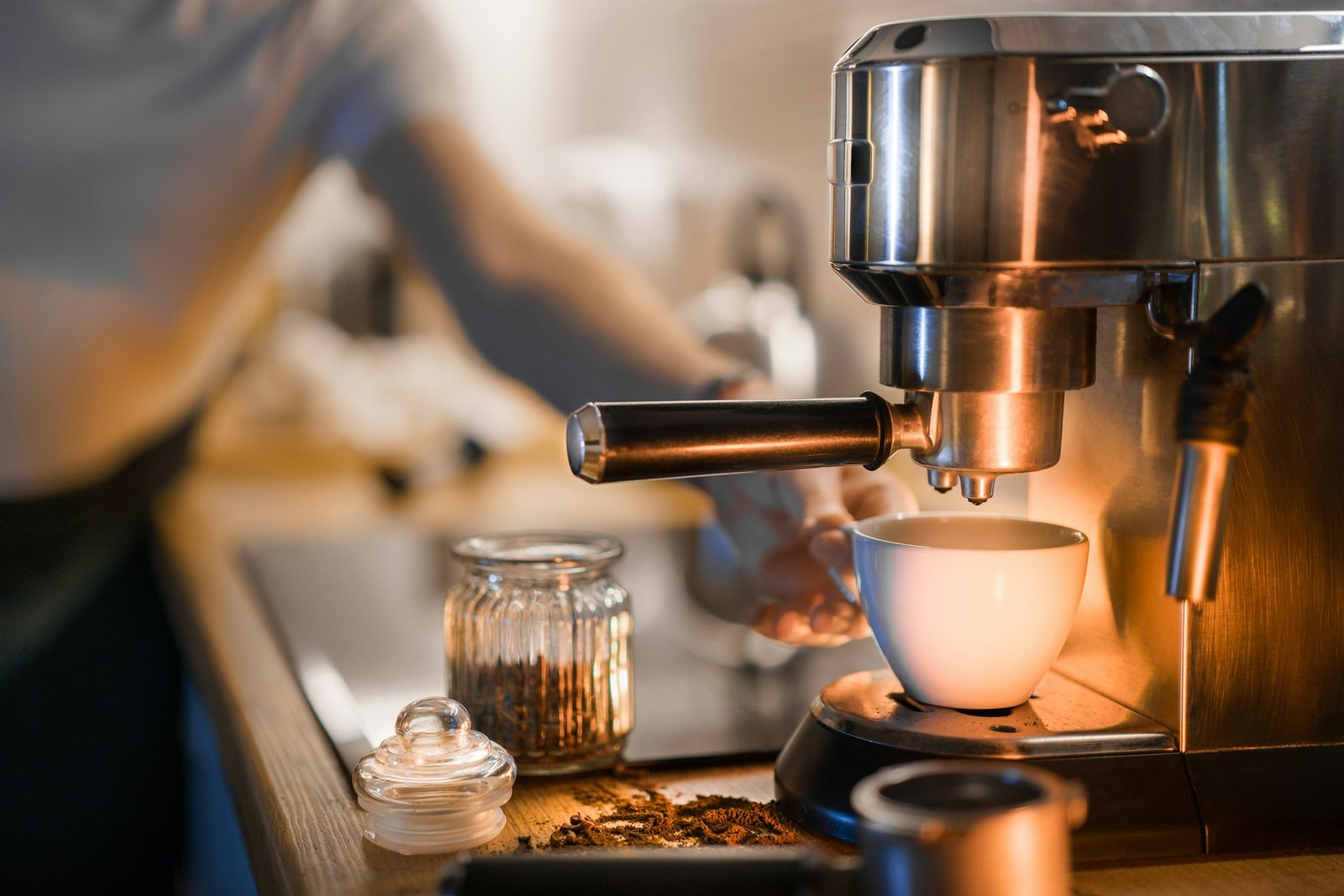
The best espresso machine with grinder depends on one question: do you want to make the shot yourself, or press a button? If you enjoy the hands-on part, the Breville Barista Pro grinds fresh beans into a portafilter, heats up in about 3 seconds and gives you a manual steam wand for latte art. If you want one-touch lattes, the De’Longhi Magnifica Evo with LatteCrema is a super automatic espresso machine that grinds, brews and froths milk for 7 preset drinks. If milk cleanup is what puts you off, the Philips 3200 LatteGo uses a 2-part milk system with no tubes that rinses in about 15 seconds, per its listing. Still learning the basics? Start with our espresso machines for beginners guide.
Disclosure: As an Amazon Associate I earn from qualifying purchases.
- Breville Barista Pro — best semi-automatic espresso machine with grinder: 30 grind settings, 3-second heat-up, manual microfoam wand.
Check current price on Amazon → - De’Longhi Magnifica Evo with LatteCrema — best all-round super-automatic: 7 one-touch recipes, hot milk frother, iced coffee setting.
Check current price on Amazon → - Philips 3200 LatteGo — easiest milk cleanup: 2-part frother with no tubes, AquaClean filter.
Check current price on Amazon →

An espresso machine with grinder saves you a second appliance, a second plug and a lot of counter clutter. It also means every shot starts with beans ground seconds earlier, which matters more for espresso than for any other brew method. But the phrase covers two very different machines: semi-automatics, where the grinder fills a portafilter and you tamp and steam yourself, and super-automatics, where everything happens inside the box. This guide compares seven popular Amazon listings from Breville, De’Longhi, Philips, Jura and Gaggia, then adds what the listings do not tell you: a side-by-side of the two machine types, a cost-per-cup check against the coffee shop, a counter space test and a realistic cleaning routine. If your coffee corner doubles as a home bar, our wine fridge and beverage cooler picks include slim under-counter models.
Espresso machine with grinder comparison table
Every espresso machine with grinder detail below comes from the Amazon product listings. “Type” decides how much of the job you do by hand. We left prices out on purpose because they change often; use the links to see today’s price. If you would rather pop in a pod for a quick cup, our single serve coffee maker picks compare Keurig, Ninja and Nespresso Vertuo models. If you would rather skip grinding entirely, our best Nespresso machine guide explains Nespresso Vertuo vs Original capsule machines.
| Machine | Type | Grinder | Pressure (listed) | Milk | Water tank | |
|---|---|---|---|---|---|---|
| Breville Barista Pro (BES878BSS) Best Overall Semi-Automatic | Semi-automatic | Conical burr, 30 settings | 9 bar extraction, pre-infusion | Manual steam wand | 67 oz | Check current price on Amazon |
| De’Longhi Magnifica Evo LatteCrema (ECAM29084SB) Best All-Round Super-Automatic | Super-automatic | Conical burr, 13 settings | 9 bar (listed) | LatteCrema automatic frother | Removable (size not listed) | Check current price on Amazon |
| Philips 3200 LatteGo (EP3241/54) Easiest Milk Cleanup | Super-automatic | 100% ceramic | Not listed | LatteGo 2-part milk system | Removable (size not listed) | Check current price on Amazon |
| Breville Barista Express Impress (BES876BSS) Best Assisted Tamping | Semi-automatic | Conical burr, 25 settings | Not listed | Manual steam wand | 2 L (about 67 oz) | Check current price on Amazon |
| De’Longhi Rivelia (EXAM44055B) Best for Two Bean Types | Super-automatic | Burr, 13 settings, 2 swappable hoppers | Not listed | LatteCrema Hot System | Removable (size not listed) | Check current price on Amazon |
| Jura E4 (15466) Best for Black Coffee Drinkers | Super-automatic | Conical burr (Aroma Grinder) | Pulse Extraction Process | None (coffee only) | 64 oz | Check current price on Amazon |
| Gaggia Brera Most Compact Super-Automatic | Super-automatic | 5 grind settings | Not listed | Pannarello steam wand | 40 oz | Check current price on Amazon |
Our picks: the best espresso machine with grinder for every kitchen
We ordered each espresso machine with grinder below from “you make the shot” to “the machine makes the shot”. The first and fourth picks are semi-automatics; the rest are super-automatics. If you are not sure which camp you are in, read the comparison section right after the picks.
1. Breville Barista Pro Espresso Machine (BES878BSS)
The Barista Pro is the Breville espresso machine with grinder to pick if you want café-style control without waiting around. Its ThermoJet heating system is listed as reaching extraction temperature in 3 seconds and switching straight from espresso to steam, so a morning flat white does not start with a warm-up wait. The integrated conical burr grinder has 30 grind settings and doses on demand into a 54 mm portafilter, and the LCD screen shows grinding and extraction progress so you can see what each adjustment does.
Behind the screen, the listing describes low-pressure pre-infusion followed by a 9 bar extraction and digital PID temperature control within about 2°C. The steam wand is fully manual, which is the right tool for real microfoam and latte art, but it takes practice. The 67 oz water tank is generous, and the box includes a 16 oz stainless milk jug, the Razor dose trimming tool and a cleaning kit. For a deeper look at how Breville’s grinder machines differ, see our Barista Express vs Barista Touch comparison.
- 3-second heat-up and fast switch to steam
- 30 grind settings and on-demand dosing
- LCD shows grind and shot progress
- Large 67 oz tank
- You still tamp and steam milk by hand
- 16 in tall, so check cabinet clearance
Best for: Home baristas who make two to four milk drinks a day and want to learn shot-by-shot control
Check current price on Amazon →2. De’Longhi Magnifica Evo Automatic Espresso Machine with LatteCrema (ECAM29084SB)
The Magnifica Evo with LatteCrema is a straightforward super automatic espresso machine: fill the bean hopper and water tank, tap one of 7 drink icons, and it grinds, doses, brews and froths. The listing names espresso, cappuccino, latte macchiato, americano and iced coffee among its drinks, and the My Latte function lets you save your own recipe. The conical burr grinder has 13 settings, and there are 3 temperature levels.
The LatteCrema frother draws milk from a 7.4 fl oz carafe, which is enough for one or two lattes at a time; you can store the carafe in the fridge between uses. Froth intensity is adjustable, and the removable parts are listed as dishwasher-safe. At 19.5 in deep and 12.1 in wide, this espresso machine with grinder is narrow but long, so measure front to back. The warranty listed is 2 years plus 1 extra year with product registration.
- True one-touch lattes and cappuccinos
- Iced coffee setting with auto-adjusted dose
- Dishwasher-safe removable parts
- Narrow 12.1 in footprint
- Small 7.4 fl oz milk carafe
- Deep 19.5 in body needs a deep counter
Best for: Households that want hot and iced milk drinks at the press of a button
Check current price on Amazon →3. Philips 3200 Series LatteGo Fully Automatic Espresso Machine (EP3241/54)
The Philips 3200 LatteGo is a fully automatic espresso machine with grinder that makes 5 drinks from fresh beans: espresso, coffee, americano, cappuccino and latte macchiato. What sets it apart is the milk system. LatteGo is just 2 parts with no tubes or hidden pieces, and the listing says it can be cleaned in as little as 15 seconds under the tap or in the dishwasher. If you have ever owned a frother with a suction hose, you know why that matters.
The grinder is 100% ceramic, and the Aroma Extract system balances brewing temperature and extraction. The AquaClean filter is the other low-effort feature: if you change it when the machine prompts you, Philips says you will not need to descale for up to 5,000 cups. The touch display lets you adjust strength, volume and milk. Listed dimensions are 10 x 17 x 15 in, so it fits under most upper cabinets.
- 2-part milk system with no tubes
- AquaClean filter cuts descaling
- Ceramic grinder
- 15 in tall fits under most cabinets
- Only 5 drink options
- Mostly plastic body
Best for: Busy households that want an automatic espresso machine with grinder and milk frother that is quick to clean
Check current price on Amazon →4. Breville Barista Express Impress Espresso Machine (BES876BSS)
The Barista Express Impress is a semi-automatic espresso machine with grinder that keeps the classic Breville layout but takes out the two steps that frustrate most new owners: dosing and tamping. Its intelligent dosing system calculates the right amount of coffee and auto-corrects the next dose, and the assisted tamping lever applies a consistent 10 kg of pressure with a 7-degree “barista twist” finish. The result is a level, polished puck without a separate tamper or scale.
The integrated conical burr grinder has 25 grind settings and sits above a 54 mm portafilter; the analog pressure gauge on the front shows whether a shot is in range. Thermocoil heating with PID control manages temperature, and the manual steam wand is there for hand-textured milk. The listing includes 4 filter basket sizes, a 250 g bean hopper, a 2 L tank and a 2-year limited warranty.
- Assisted tamping with consistent 10 kg pressure
- Auto-correcting dose
- Analog pressure gauge for feedback
- 2-year limited warranty
- Manual milk steaming takes practice
- 14.5 in wide and 16.5 in tall
Best for: People who want real espresso skill-building without the mess of manual tamping
Check current price on Amazon →5. De’Longhi Rivelia Automatic Espresso Machine (EXAM44055B)
The Rivelia solves a problem every other super automatic espresso machine has: one bean hopper. It comes with two 8.8 oz interchangeable hoppers, so you can lift out the dark roast and snap in decaf for the afternoon. The listing says the 13-setting burr grinder and the guided setup save the ideal grind, dose and temperature for each bean type, so you are not re-dialing every switch.
There are 18 one-touch recipes, including latte, cappuccino, cortado, flat white, iced coffee and espresso over ice, and an extra-shot function. The LatteCrema Hot System froths dairy or plant-based milk and has an auto-clean function. Four user profiles make this espresso machine with grinder a good fit for families with different orders. Listed dimensions are 12.01 x 19.69 x 19.09 in, so this is the tallest machine here; check the space under your cabinets before buying.
- Two swappable bean hoppers
- 18 one-touch recipes, hot and iced
- 4 user profiles
- Auto-clean milk frother
- Tallest machine in this guide at about 19 in
- Cold foam needs an accessory sold separately on the brand site
Best for: Families or couples who drink different beans, including decaf
Check current price on Amazon →6. Jura E4 Automatic Coffee Machine (15466)
The Jura E4 is an espresso machine with grinder that skips milk entirely and puts its effort into the coffee. It makes 5 specialties at the touch of a button: espresso, coffee, ristretto, café barista and lungo barista. Jura’s Pulse Extraction Process is designed to optimize extraction for short drinks, and the Professional Aroma Grinder is a conical burr grinder. Strength and volume are programmable.
Capacity is practical for a black coffee household: a 64 oz water tank and a 10 oz bean container, per the listing. A pre-ground bypass lets you brew a cup of decaf without emptying the hopper, and the spout height is adjustable. Integrated maintenance cycles handle rinsing and cleaning prompts. Listed size is 11 in wide, 13.8 in tall and 17.6 in deep.
- Simple dial-and-button controls
- 64 oz tank and 10 oz bean container
- Pre-ground bypass for decaf
- Compact 13.8 in height
- No milk frother or steam wand
- Only coffee and espresso drinks
Best for: Espresso, americano and black coffee drinkers who never add steamed milk
Check current price on Amazon →7. Gaggia Brera Super-Automatic Espresso Machine
If counter space is tight, the Gaggia Brera is the smallest espresso machine with grinder in this guide: the brand’s comparison chart lists it at 12.4 in high, 10 in wide and 17.5 in deep. It still grinds whole beans with 5 grind settings, has a front rotary dial for strength, and its digital display walks you through the basics. A top cup-warming surface keeps espresso cups warm.
Milk is handled by a Pannarello steam wand, which is easier than a pro wand because it pulls in air for you, though you still hold the jug. The tank is a 40 oz reservoir, the hopper holds 8.8 oz, and maximum cup height is 4.5 in, so tall travel mugs will not fit under the spout. The drip tray has a red float level indicator. The listed warranty is 1 year limited.
- Narrowest machine at 10 in wide
- Easy Pannarello milk wand
- Front-access strength dial
- Cup-warming top
- 4.5 in max cup height
- Smaller 40 oz water tank
Best for: Small kitchens, apartments and people who drink espresso and cappuccino in standard cups
Check current price on Amazon →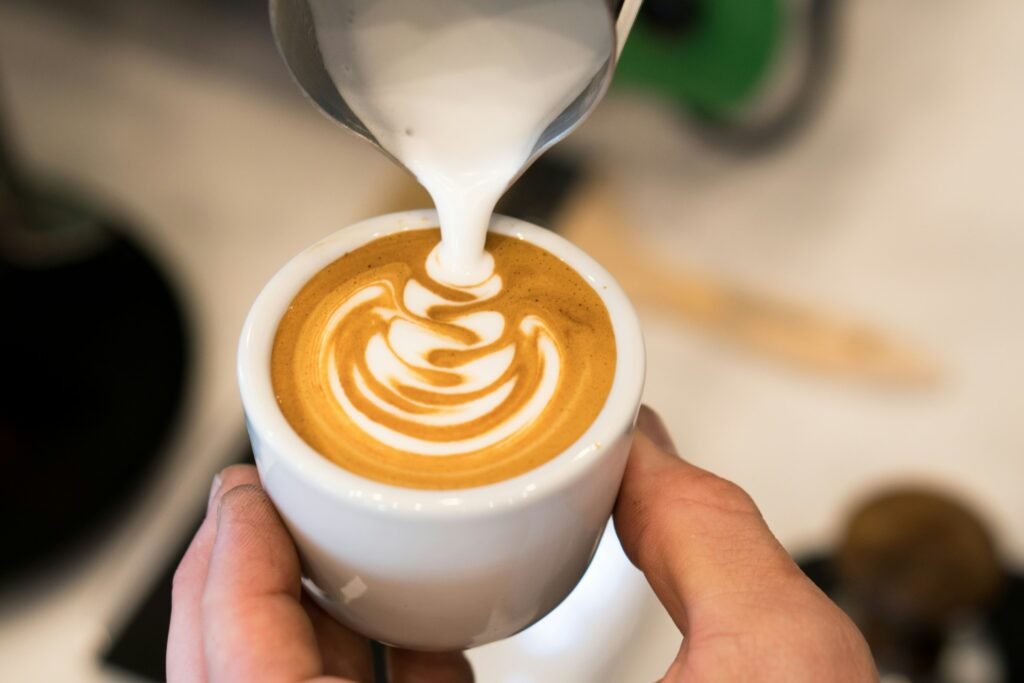
Super automatic espresso machine vs semi-automatic: which type fits you?
Both types count as an espresso machine with grinder, but the daily experience is completely different. Here is the super automatic espresso machine vs semi-automatic split in plain terms.
| Semi-automatic (Barista Pro, Express Impress) | Super-automatic (Magnifica Evo, Philips 3200, Rivelia, Jura E4, Brera) | |
|---|---|---|
| Who grinds and doses | Machine grinds into a portafilter; you adjust grind size | Machine grinds and doses inside the brew unit |
| Tamping | You tamp (the Impress assists) | Done automatically |
| Milk | You steam milk with a wand | Automatic frother or carafe on most models |
| Time per latte | About 3 to 5 minutes with practice | About 1 to 2 minutes, mostly waiting |
| Learning curve | Days to weeks to dial in | Minutes |
| Taste control | High: grind, dose, shot time, milk texture | Medium: strength, volume, temperature presets |
| Daily mess | Grounds on the counter, knock box, wand purge | Mostly sealed; empty grounds bin and drip tray |
| Best fit | People who enjoy the ritual and want latte art | People who want consistent drinks with no fuss |
A simple rule: if you would happily spend five minutes making a drink on a Saturday, a semi-automatic espresso machine with grinder will reward you. If your coffee has to happen while you pack lunches, a super automatic espresso machine is the better buy, even if the shot is a little less customizable.
Cost per cup: espresso machine with grinder vs the coffee shop
This is a generic planning example, not tied to any machine above. Assume a 12 oz (340 g) bag of whole beans at $15 and whole milk at $4 per gallon. A double shot uses about 18 g of coffee, so one bag makes about 19 doubles.
| Item | At home (example) | Coffee shop (example) |
|---|---|---|
| Double espresso | About $0.79 in beans | Often $3 to $4 |
| Latte (double + 8 oz milk) | About $0.79 + $0.25 = $1.04 | Often $5 to $6 |
| Two lattes a day for a year | About $760 | About $3,650 to $4,380 |
| Extras to budget | Water filters, descaler, cleaning tablets | Tips, trips, waiting in line |
Even with filters and descaler added, an espresso machine with grinder pays back fastest for people who already buy one or two milk drinks a day. If you only buy a coffee out once a week, the math is much slower, and a cheaper brewer may make more sense.
Counter space check before you buy
Most kitchens have about 18 in between the counter and the bottom of the upper cabinets, and a standard counter is about 25 in deep. Bean hoppers and water tanks often fill from the top, so you need extra room above the machine, not just enough to slide it under. These are the dimensions of each espresso machine with grinder as listed on Amazon (some listings swap width and depth, so measure both ways).
| Machine | Listed dimensions | Height note |
|---|---|---|
| Breville Barista Pro | 13 D x 14 W x 16 H in | About 2 in left under 18 in cabinets |
| Breville Barista Express Impress | 12.5 D x 14.5 W x 16.5 H in | Top hopper; pull forward to refill |
| De’Longhi Magnifica Evo | 19.53 D x 12.09 W x 16.06 H in | Deep; leave room for the front carafe |
| Philips 3200 LatteGo | 10 D x 17 W x 15 H in | Fits under most cabinets |
| De’Longhi Rivelia | 12.01 x 19.69 x 19.09 in | Taller than 18 in; may need an open spot |
| Jura E4 | 11 W x 13.8 H x 17.6 D in | Plenty of clearance |
| Gaggia Brera | 10 W x 12.4 H x 17.5 D in | Lowest machine here |
- Measure the height from counter to cabinet bottom, then subtract 3 to 4 in for refilling the hopper and tank.
- Measure depth from the backsplash to the counter edge; the machine should sit at least 2 in back from the edge.
- Check that a wall outlet is within reach of the cord. These machines draw about 1,250 to 1,680 W on their listings, so plug them straight into the wall, not a power strip.
- Leave side space for the water tank if it slides out sideways (the Philips tank sits on the left, the Rivelia tank on the right).
- Plan a landing spot for the milk jug or carafe and a small bin for the knock box or grounds container.
Cleaning and descaling an espresso machine with built in grinder
An espresso machine with built in grinder only tastes good if you keep up with a few small jobs. The routine below works for every espresso machine with grinder in this guide; always follow your manual for exact cycles.
Daily (2 to 3 minutes)
- Empty the drip tray and the grounds container or knock box.
- Purge the steam wand for 2 seconds and wipe it with a damp cloth right after steaming, before milk dries on.
- Rinse the milk carafe or LatteGo parts, or run the auto-clean cycle on the De’Longhi frothers.
- Rinse the portafilter and basket on semi-automatics, and wipe the group head.
Weekly
- Wash the removable dishwasher-safe parts listed for your model.
- Brush out old grounds around the grinder outlet and bean hopper with a dry brush. Never put water in the grinder.
- On machines with a removable brew unit, rinse it under the tap and let it air dry.
- Run a cleaning tablet or backflush cycle if your manual calls for it.
Every 1 to 3 months
- Descale when the machine prompts you, or more often with hard water. Use the water hardness strip included with most of these machines to set the right interval.
- Replace the water filter on schedule. On the Philips 3200, changing the AquaClean filter on prompt is listed as removing the need to descale for up to 5,000 cups.
- Avoid very oily, dark or flavored beans in super-automatics; they can clog the grinder and brew unit over time.
Automatic espresso machine with grinder and milk frother: which milk system?
If lattes are your main drink, the milk system on an espresso machine with grinder matters as much as the grinder itself. Here is how the four styles in this guide compare when you shop for an automatic espresso machine with grinder and milk frother.
- Manual steam wand (Barista Pro, Express Impress): best texture and latte art, but you learn the technique and clean the wand every time.
- Pannarello wand (Gaggia Brera): pulls in air for you so foam is easier, still hands-on.
- Automatic carafe (De’Longhi LatteCrema on the Magnifica Evo and Rivelia): one touch from bean to latte, with auto-clean; the carafe can go in the fridge.
- Tubeless 2-part system (Philips LatteGo): one touch and the fastest to rinse.
- No milk (Jura E4): skip it entirely if you drink espresso or black coffee.
Who should skip a built-in grinder
A built-in grinder is convenient, but an espresso machine with grinder is not the right buy for everyone. Consider a different setup if any of these sound like you:
- You drink one or two mugs of black drip coffee a day. A drip brewer with a grinder is simpler; see our coffee makers with grinder picks.
- You want to upgrade the grinder later. A built-in grinder cannot be swapped, while a separate grinder can move to your next machine.
- You switch beans every day and do not want leftover beans in the hopper (the Rivelia’s two hoppers are the exception).
- You mostly use pre-ground coffee. Only some machines, like the Jura E4, offer a pre-ground bypass.
- Your counter is very shallow or your cabinets sit lower than 16 in above the counter.
- You mainly want tea or pour-over. A temperature-control kettle is the better tool; see our best electric kettles guide.
What to check before buying
Run through this short list before you choose an espresso machine with grinder:
- Type: semi-automatic for control, super-automatic for convenience.
- Grinder: number of grind settings and whether it is burr or ceramic.
- Milk: wand, automatic carafe, tubeless system or none.
- Size: width, depth and height against your counter and cabinets.
- Water tank and bean hopper size for how many drinks you make a day.
- Cleaning: dishwasher-safe parts, auto-clean, water filter support.
- Warranty length shown on the listing.
Taking your espresso on the road? Our best insulated tumbler guide compares leak-proof travel mugs and heat retention claims.
How we chose the best espresso machine with grinder
We did not test these machines hands-on. We started with popular Amazon listings in the espresso machine category, kept only models that are a true espresso machine with grinder (built in, not bundled), and read each product page for the facts used here: grinder type and settings, pressure, milk system, one-touch drinks, water tank and hopper size, listed dimensions and warranty. We grouped them by machine type and by the problem each solves best, then wrote the type comparison, cost-per-cup, counter space and cleaning sections ourselves. No brand paid for placement, and we left out prices because they change often. If you are waiting for the holiday sales, our Black Friday home deals hub covers what to buy on Black Friday and how to spot special sale-only model numbers. For iced lattes at home, see our best countertop ice maker picks, including nugget ice options.
Helpful resources: FDA: How much caffeine is too much? and NFPA: Electrical safety in the home.
Espresso machine with grinder: FAQ
Is an espresso machine with grinder worth it?
Yes, if you drink espresso or milk drinks most days. An espresso machine with grinder grinds beans seconds before brewing, saves counter space compared with two appliances, and in our generic example makes a latte for about $1 in ingredients. If you only want black drip coffee, a grind-and-brew coffee maker is simpler.
What is the difference in a super automatic espresso machine vs semi automatic?
A semi-automatic grinds into a portafilter, and you tamp, lock it in and steam milk yourself. A super automatic espresso machine grinds, doses, tamps, brews and often froths milk with one touch. Semi-automatics give more taste control; super-automatics are faster and more consistent.
Which automatic espresso machine with grinder and milk frother is easiest to clean?
Among the machines in this guide, the Philips 3200 LatteGo is the easiest because its milk system has 2 parts and no tubes and is listed as rinsing clean in about 15 seconds. The De’Longhi LatteCrema frothers on the Magnifica Evo and Rivelia also have an auto-clean function.
How often should you descale an espresso machine with built in grinder?
Descale whenever the machine prompts you, typically every 1 to 3 months depending on water hardness and use. Using the water hardness strip and a compatible water filter stretches the interval; Philips says its AquaClean filter, changed on prompt, avoids descaling for up to 5,000 cups.
Can you use pre-ground coffee in a super automatic espresso machine?
Some models allow it through a bypass chute. The Jura E4 lists a pre-ground bypass, which is handy for an occasional decaf. Check the listing or manual first, and never pour ground coffee into the bean hopper, because it can clog the grinder.
How much counter space does an espresso machine with grinder need?
Plan on 10 to 15 in of width, 13 to 20 in of depth and 3 to 4 in of free space above the machine for refilling. The Gaggia Brera is the most compact pick here at 10 in wide and 12.4 in high, while the Rivelia is about 19 in tall.
Also Explore
Latest Posts
 7 Best Christmas Stocking Holders for Every Mantel (2026)
 Best Hanging Toiletry Bag for Women (2026): 8 Organized Picks for Travel and Cruises
 Best Butter Dish with Lid (2026): 8 Picks for Counter and Fridge
 Best Luxury Nail Polish Gift Set: 7 Picks for Christmas (2026)
 Best Boot Tray for Winter (2026): 8 Picks for Snowy, Muddy Entryways
 Best Watch Winder for Automatic Watches (2026): 7 Quiet Picks and a Gift Guide for Him